
Guide
Garage Doors on Thornton Houses Built Before Insulation Rules
Thornton homes built 1958-2010, most from the 1960s-70s, often have doors with no insulation code behind them. Here's what that means for your door.
Local detail
What to Look At First
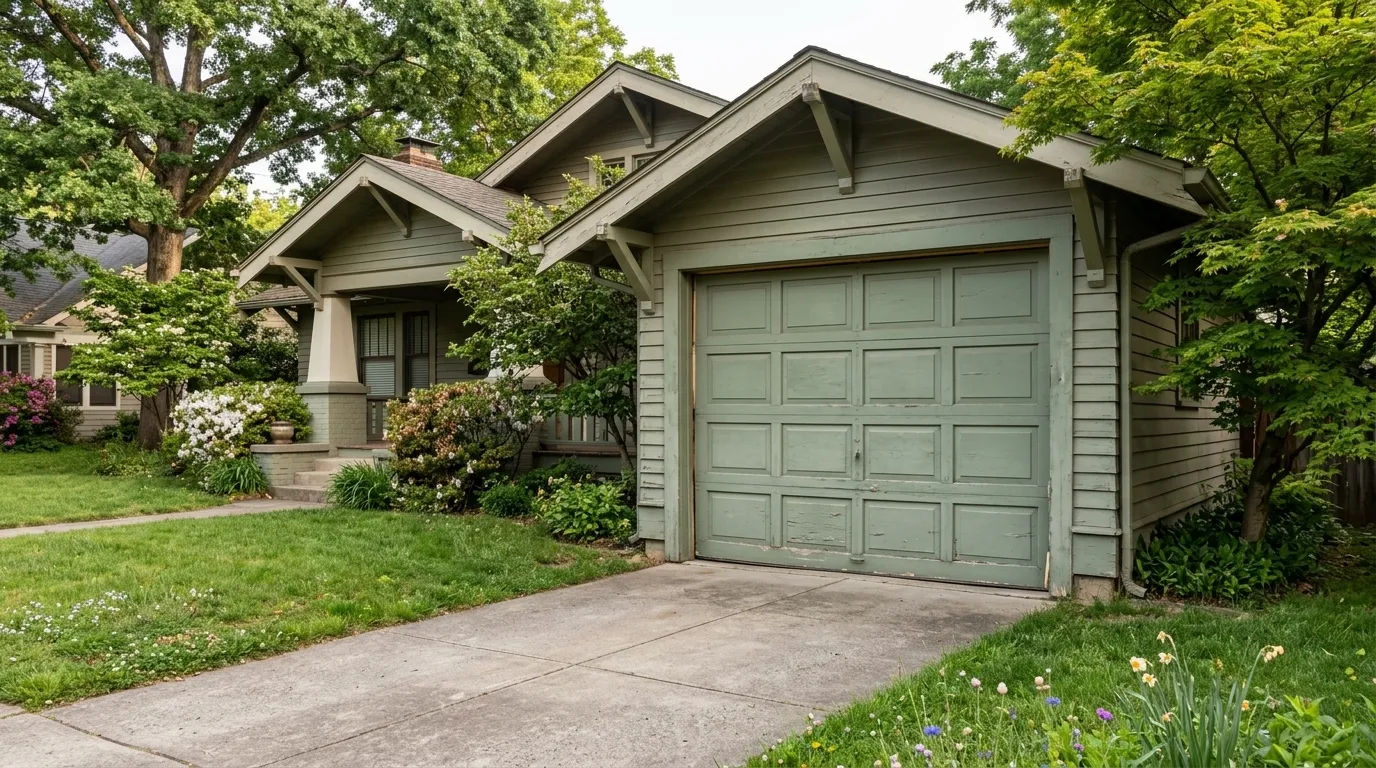
Start with the door panel itself, not the opener. Thornton's housing stock runs 1958 to 2010, with a median build year around 1979, and most of that came up during the 1960s and 70s across the named areas that make up this side of the metro. Doors from that era were built to hold back weather, not to hold in heat - insulation requirements for garage doors weren't part of the code when these houses went up. If your door is a single steel skin with no foam backing, cold air moves through it the same way it moved through the original door decades ago, even if the door itself has been swapped once already.
Check the bottom seal next. On a house from the 60s or 70s, the track and jamb were framed to a tolerance nobody worries about today. A worn bottom seal on an older frame doesn't just let in a draft - it lets in enough cold air to freeze condensation on the inside of the panel, which is a different problem than a seal doing the same job on a newer, tighter frame. Look at the gap along both sides too. Gaps wider than a pencil mean the door was never sized right for this jamb, insulated or not.

The area
The Problem
An uninsulated steel door on a house built before insulation rules were part of the code isn't just a comfort issue in a cold-climate town like this. Thornton sits in a severe cold band, and a single-layer door swings temperature fast - the garage goes from outside-cold to barely-warmer-than-outside in minutes once the sun sets. That matters more here than it would somewhere mild, because anything stored against that wall, or any room sharing a wall with the garage, takes the swing with it.
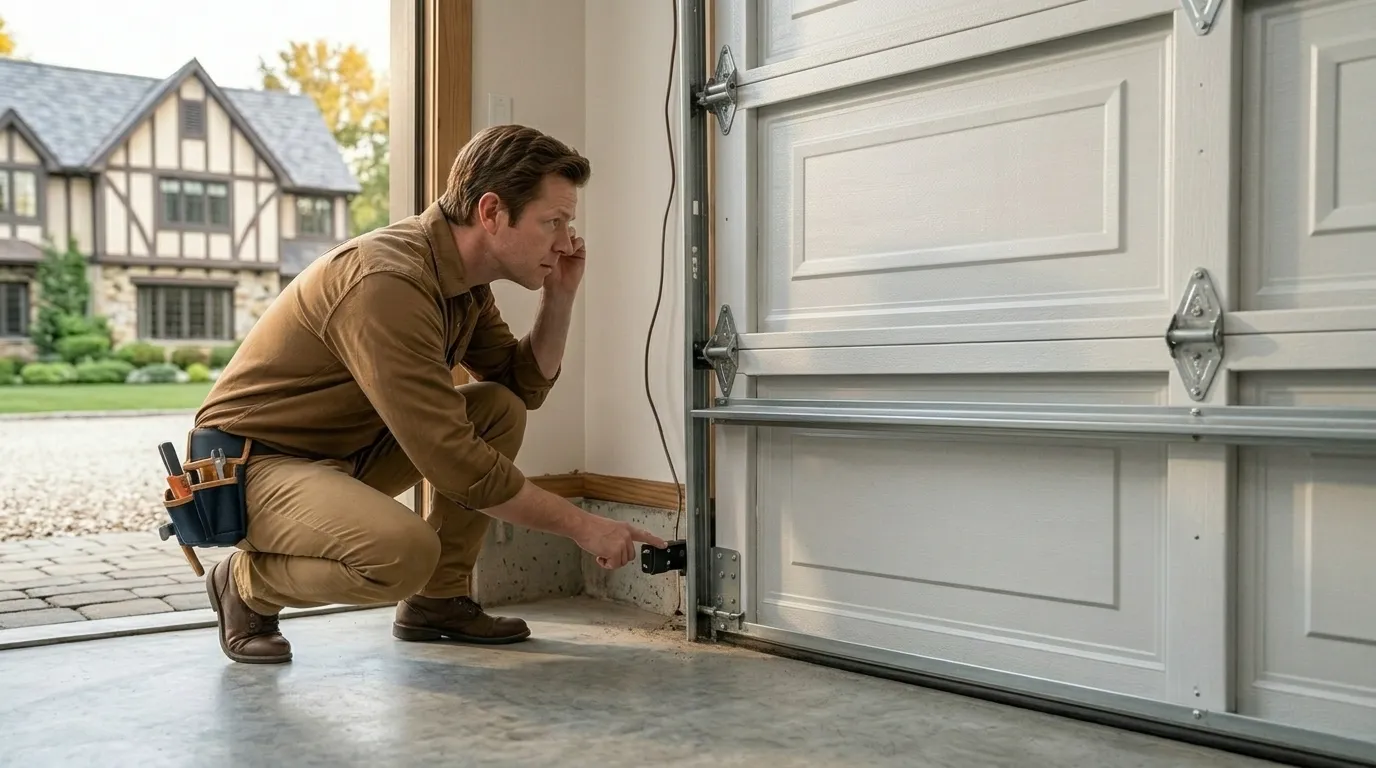
The other half of the problem is hardware fatigue, not comfort. A door built to a 1970s spec, running on original-style hardware even after a panel replacement, works harder in a severe cold swing than a modern insulated door does. Springs lose tension faster in repeated deep-cold cycles, and steel that isn't backed by foam contracts and expands more than a sandwich panel would. That's wear you don't see until the spring goes, usually on the coldest morning of the stretch.
What we find
Where People Go Wrong
The common mistake is treating this as a weatherstrip fix. Homeowners on 1960s and 70s-era Thornton houses replace the bottom seal, maybe add foam tape along the sides, and call it solved. That helps the draft. It does nothing for the panel itself, which is still a bare steel sheet moving heat straight through on a severe cold night.
The other mistake is assuming a newer-looking door means it's insulated. Plenty of doors installed in the last fifteen or twenty years on these same original 1970s framed openings are still non-insulated steel - a homeowner replaced a worn-out door with whatever was in stock at the time, not necessarily anything built to a current insulation spec. Age of the door and insulation value aren't the same thing, and on a house from this build era you can't assume one from the other. Pull the door's spec sheet or check the panel edge for foam before you decide it's fine.
One limit on our end: we don't do full insulation retrofits on an existing bare panel - foam-filling a door that wasn't built for it isn't a job that holds up, and we'll tell you that instead of billing for it. Replacement is the honest fix once a door's this old.
How we work
What the Weather Here Does to It
Thornton's cold isn't mild-cold, it's the severe end of the band, and that matters specifically for doors that predate insulation code. A steel-only panel on a severe-cold night contracts enough that gaps at the corners widen measurably compared to a summer afternoon. On a 1960s or 70s frame that was never dead square to begin with, that contraction is enough to let the door bind in the track on the coldest mornings - the classic call we get after a hard overnight drop.
Springs feel it too. Cold steel is less forgiving steel, and a torsion spring on an original-era door working through a severe cold swing loses lift faster than the same spring would in a milder climate. If your door's been sluggish on cold mornings and fine by afternoon, that's not the opener weakening - that's the cold acting on old, uninsulated hardware exactly the way it will keep acting on it until the door's replaced.
Questions
Common questions
Was my garage door built with insulation in mind?
If your house went up in the 1960s or 70s, which is typical for this side of Thornton, the original door almost certainly wasn't insulated - that wasn't part of the code then. Even a later replacement door might be bare steel if it was swapped without upgrading the spec. Check the panel edge for foam backing to know for sure.
Can you add insulation to my existing door?
Not as a retrofit on a panel that wasn't built for it - foam-filling an old bare steel door doesn't hold up and we won't bill you for a fix that won't last. If the door's from that pre-insulation era and struggling with the cold, replacement is the straight answer.
Why does my door stick only on the coldest mornings?
Steel contracts in severe cold, and on an original 1960s or 70s frame that was never perfectly square, that contraction is enough to bind the door in the track. It's a cold-and-old-hardware combination, not a broken opener.
Ready when you are
Need a garage door sorted in Thornton?
Thornton Garage Door Pros repairs and installs garage doors, springs and openers in Thornton, CO and the surrounding area.