
Guide
Is Your Thornton Garage Door Worth Fixing, or Time to Replace
A guide for Thornton homeowners with 1960s-2000s houses: how to tell if your garage door and opener are worth repairing given our cold climate and housing stock.
Local detail
What to Look At First
Start with the age bracket your house falls into. Most homes in this part of Thornton and the neighboring pocket of Eastlake, a mile to the WNW, went up somewhere between 1958 and 2010, with a lot of the stock clustering in the 1960s and '70s. That range matters because it tells you what's behind the panel before you even open it.
If your house dates to that earlier band, look for a torsion spring system mounted on a single center shaft, steel tracks with visible surface rust at the rollers, and an opener that predates modern safety-reversal sensors. If your place is newer, closer to the 1980s-2000s end of the range, you're more likely dealing with extension springs on side rails and a lighter-gauge door.
Check the bottom panel for water staining and the weatherstrip for cracking - both show up faster here than in milder climates. Pull the manual release and lift the door by hand. If it's balanced and moves with light effort, the springs are doing their job. If it drops like dead weight or won't budge past waist height, you've got a spring problem, not a cosmetic one, and that changes the whole repair-versus-replace math.
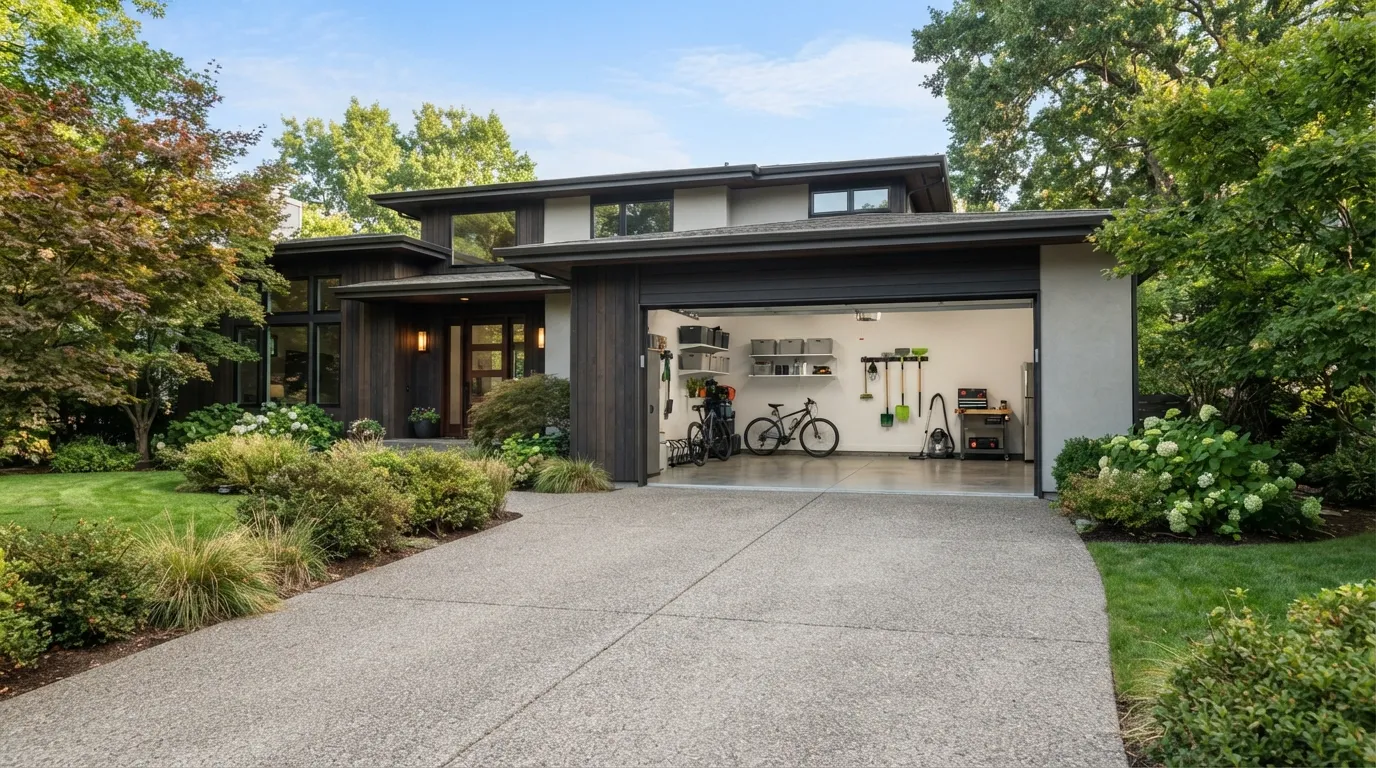

The area
The Problem
A door bought fixing has to earn its keep against two things: the age of the hardware and what our winters do to steel and lubricant. On a house from the 1960s or '70s, the springs, drums, and cable have likely been replaced at least once already, sometimes with mismatched parts from different eras. Mixing a modern opener onto original 1970s track is common here, and it's often where the real trouble starts - not the opener, but the track flexing under a door it was never sized for.
On the newer end of our 1958-2010 range, doors are usually a single generation of hardware, which makes the repair call simpler: if the springs are original and the door is under 20 years old, fixing it almost always beats replacing it.
The honest limit here is this: if the door itself is heavily rusted through the bottom panel, no spring or cable repair fixes that. A new spring on a rotted panel is money spent on a door that still needs replacing in a year or two.
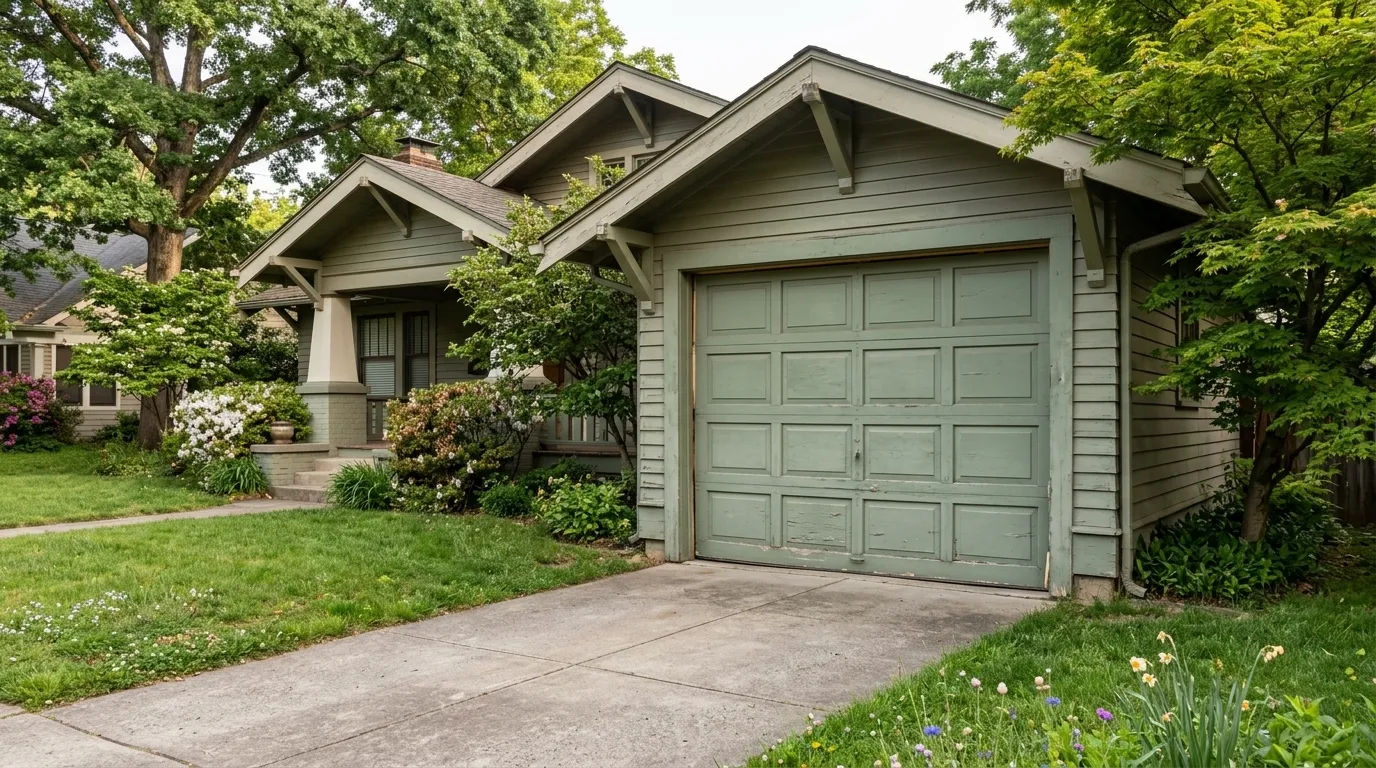
What we find
Where People Go Wrong
The most common mistake we see in Thornton is replacing a broken spring but leaving 40-year-old track and rollers in place, because the track looks fine from across the garage. It isn't. Track from the 1960s-70s stock common across this service area was built to a lighter door weight than what's sold today, and pairing new springs with old track just moves the failure point to the rollers or the header bracket.
The second mistake is skipping the cable inspection because the door still opens. A frayed cable on an original torsion setup can hold for months and then let go all at once, usually with the door at full height. That's not a controlled failure - the door drops.
Third: people replace the opener and assume that fixes a slow or noisy door. If the door is heavy to lift by hand, a stronger motor just masks a spring problem instead of solving it, and it burns the opener out faster.
How we work
What the Weather Here Does to It
Thornton sits in a severe cold climate band, and that changes what "worth fixing" means compared to a mild-winter town. Steel springs lose tension and become brittle with repeated freeze cycles, and the grease in old bearings thickens in cold, which is why a door that worked fine in September can bind or groan by January.
On houses from our 1958-2010 stock, original weatherstripping is almost always the first thing to fail under cold stress - it cracks, shrinks, and lets the cold slab air in, which then affects how the wood or steel panel behaves. That's a cheap fix and always worth doing regardless of the door's age.
Springs are a different call. Cold-brittle steel is more likely to snap outright than gradually weaken, so a spring that's been making noise through one Thornton winter is a higher priority repair than the same symptom in a milder climate - waiting isn't free here the way it might be somewhere warmer.
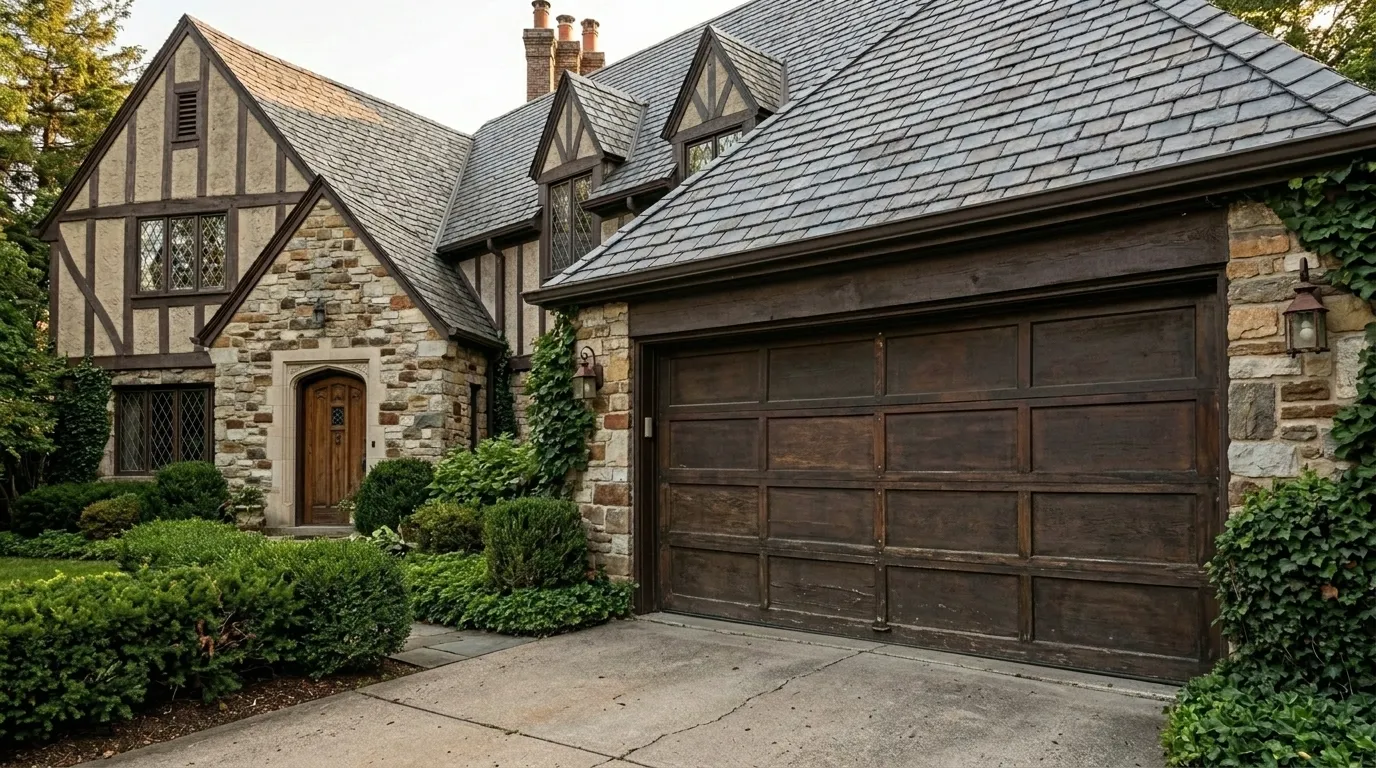
Questions
Common questions
How do I know if my garage door spring is original to the house?
If your Thornton house was built in the 1960s or '70s, there's a good chance the spring has been swapped at least once by a previous owner. Look for mismatched paint, a spring that doesn't match the wire gauge of the other side on a double-spring setup, or a receipt in the seller disclosure paperwork. Absent that, assume it's due for inspection.
Does cold weather really affect whether a door is worth repairing?
Yes. In a severe cold climate like ours, steel springs become brittle with repeated freeze-thaw cycles and are more likely to snap outright rather than just weaken gradually. A spring already making noise through winter is a higher-priority fix here than it would be in a milder climate.
My door is from the 1970s - is it worth putting a new opener on it?
Only if the door itself lifts easily by hand once disconnected from the opener. If it's heavy or drops fast, a new motor just covers up a spring or track problem and will burn out faster carrying weight it wasn't built for.
What's not worth fixing?
A bottom panel rusted through, which is common enough in our older 1958-2010 stock. Spring, cable, and roller repairs are usually worth it, but a rotted or rusted-through panel means the door needs replacing regardless of what else is fine.
Ready when you are
Need a garage door sorted in Thornton?
Thornton Garage Door Pros repairs and installs garage doors, springs and openers in Thornton, CO and the surrounding area.