Thornton, CO

Garage Door Maintenance Built for Thornton's Housing and Winters

Serving Thornton homes built 1958-2010 through severe cold winters. Maintenance built around torsion springs, weather seals, and hardware that ages fast here.

Garage Door Maintenance Built for Thornton's Housing and Winters in Thornton
Same-day serviceTrusted local pros
Serving Thornton, COBackground-checked techsHonest, upfront pricingFast local response
1958–2010
Typical build years of local homes
1979
Median year homes were built
Hard winters
Climate that shapes door wear
32
Named areas in our coverage

Local causes

Why This Fails Locally

Most of the housing stock across this service area went up between 1958 and 2010, with a median build year around 1979 and a heavy concentration of 1960s-70s construction spread across 32 named neighborhoods. That matters because a door and its hardware installed forty-plus years ago is still often original, or close to it, and torsion springs, rollers, and cable drums all have a working lifespan measured in cycles, not years. A door that's been opening and closing on the same spring since the Carter administration is living on borrowed time.

Layer on the climate. This area sits in a severe cold band, and that's not a minor detail for a garage door. Steel tracks contract in freezing temps, lubricant thickens and stops doing its job, and rubber weather seals crack instead of flexing. A door that operates fine in July can bind, groan, or throw a code error in January simply because the metal shrank a few thousandths of an inch and nobody adjusted the track in years.

Put those two facts together and you get the pattern we see constantly: aging hardware that was never designed to handle decades of hard freeze-thaw cycles, quietly wearing out faster than the owner realizes until something snaps.

Why This Fails Locally

Warning signs

How It Shows Up

On houses from this era, the first sign is almost always noise. A door that used to be quiet starts grinding on the way up, or the opener strains and hesitates before it catches.

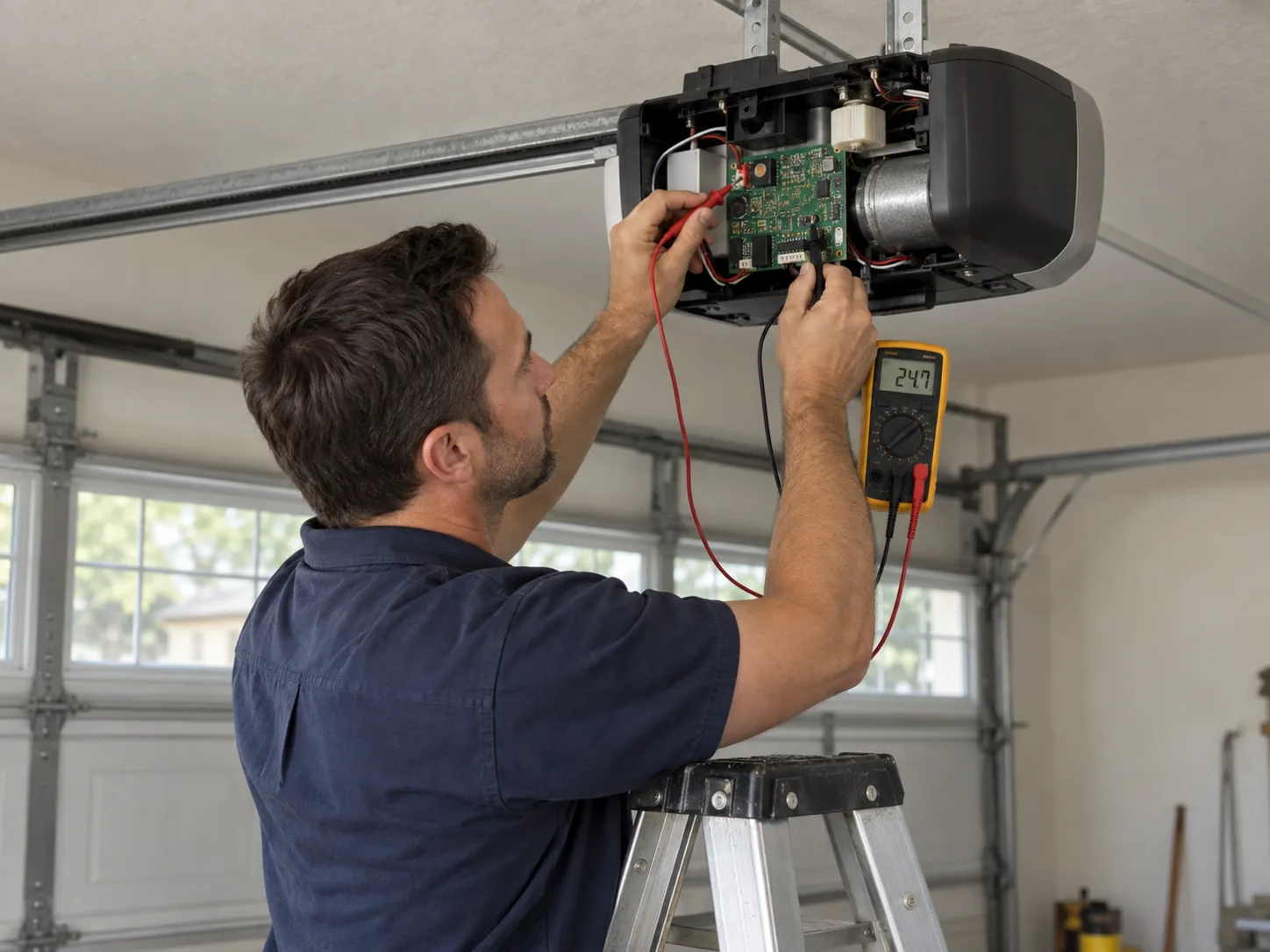
Spring tension indicator signs

That's usually a torsion spring losing tension or a roller that's worn oval instead of round, both common on hardware original to a 1960s-70s build. Cold-weather households across this area also see a specific complaint: the door reverses on its own, or the remote works from the driveway but not from inside the car.

Winter contraction binding

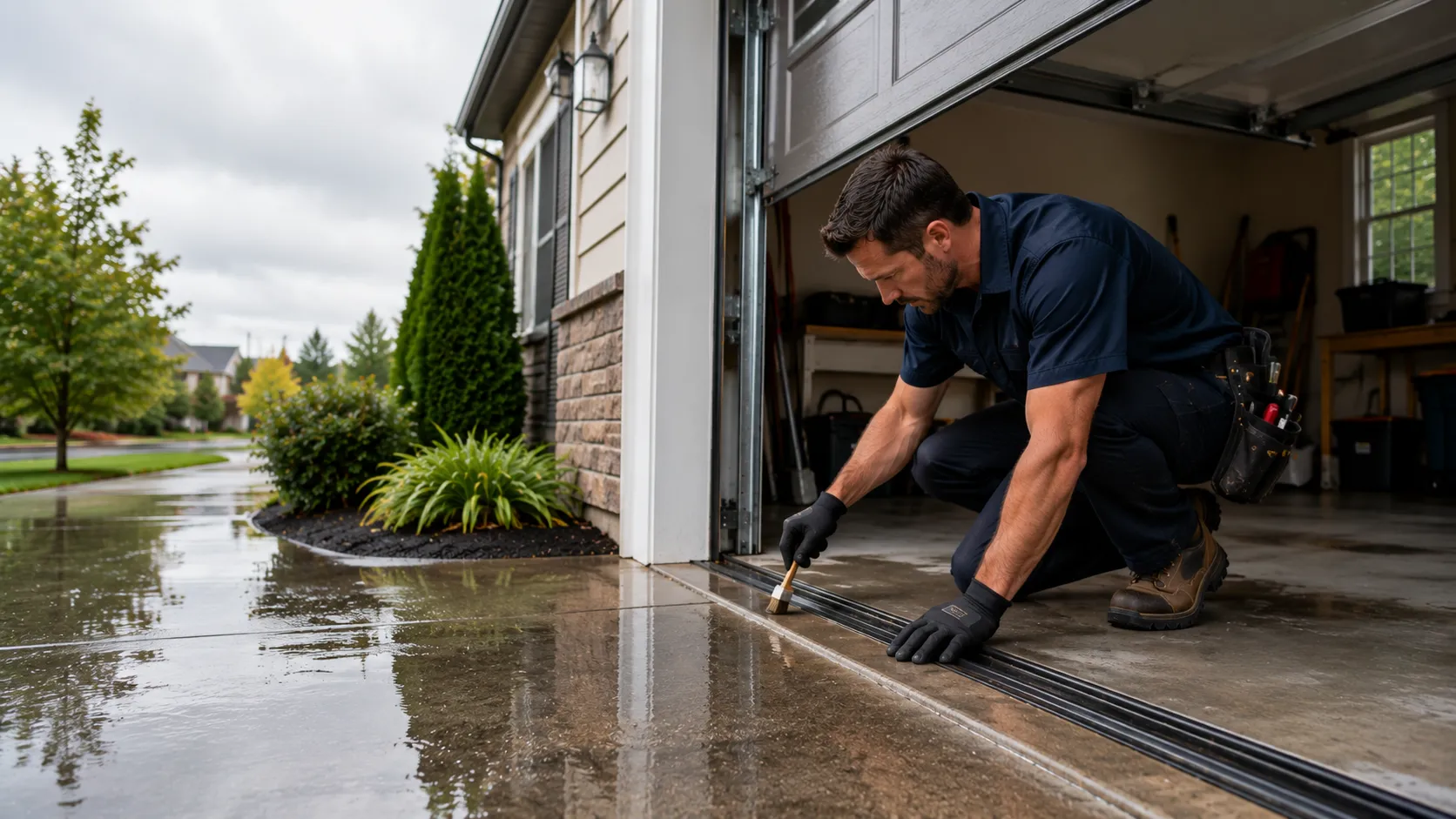
That's frequently a sensor alignment issue caused by a slight shift in the track from repeated cold contraction, not a failed opener. Weatherstripping is the other giveaway. Original bottom seals and side seals on older doors go brittle in a severe cold climate long before the door itself fails, and once that seal cracks, you get a visible gap at the corners and a cold draft along the garage floor in winter.

Weatherseal degradation patterns

Owners often assume this means the whole door needs replacing. Usually it doesn't - it means the seal and maybe the track alignment need attention before the spring goes next. If you're hearing a slow grind, seeing daylight around the edges, or noticing the opener working harder than it used to, that's the fault pattern showing up before it turns into an emergency call.

The repair

What the Fix Involves

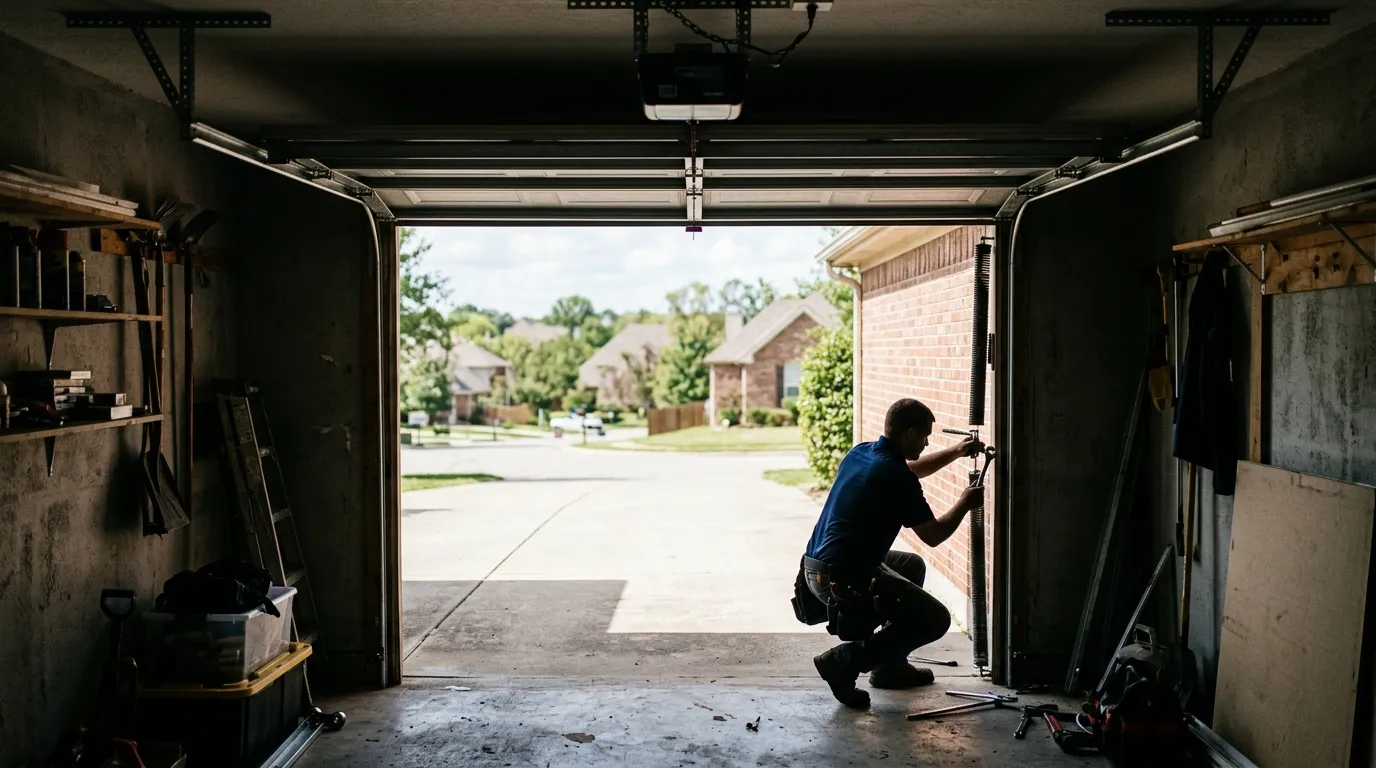
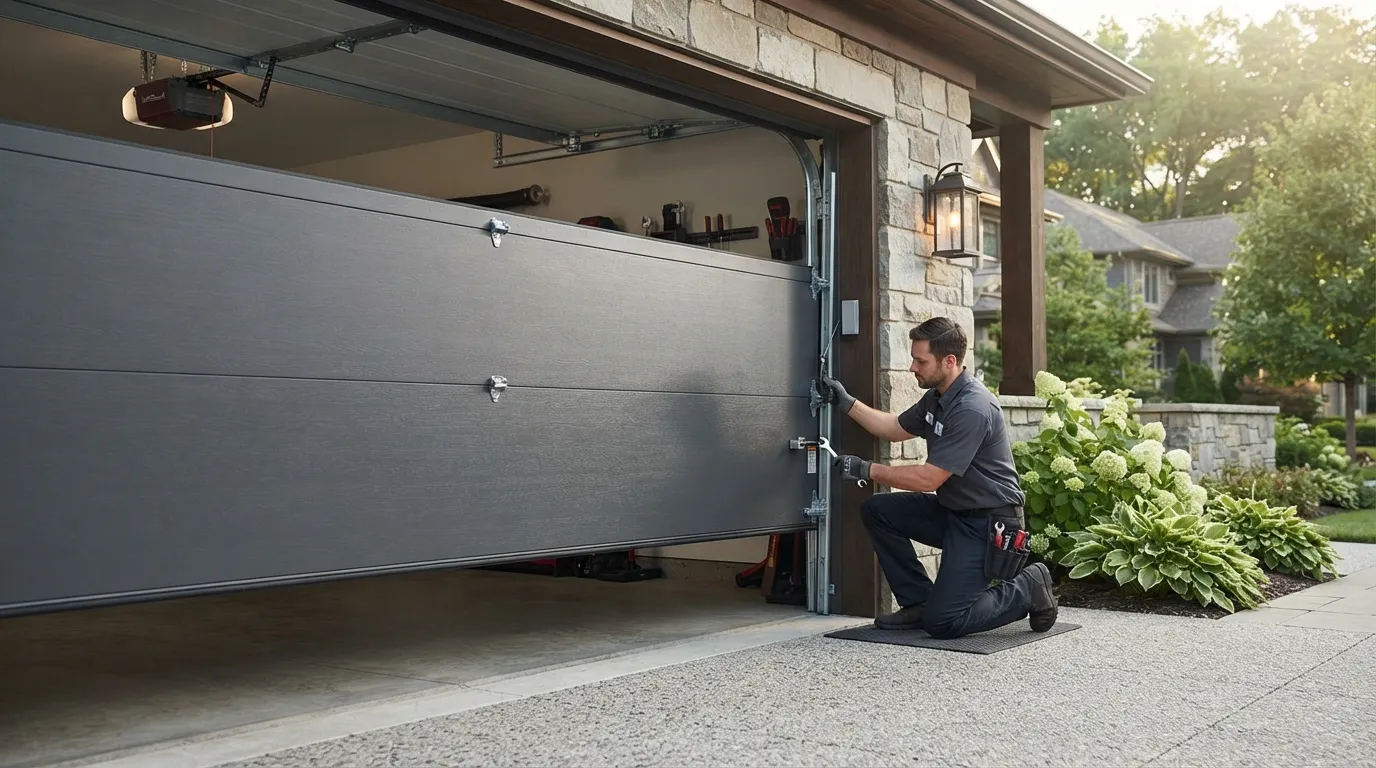
A real maintenance visit on a house from this era starts with the spring. Given the age of the housing stock, we check tension and wear on the torsion spring first, because a spring that's undersized or fatigued from decades of freeze-thaw cycling is the most common failure point we find.

  1. Roller hinge condition assessment

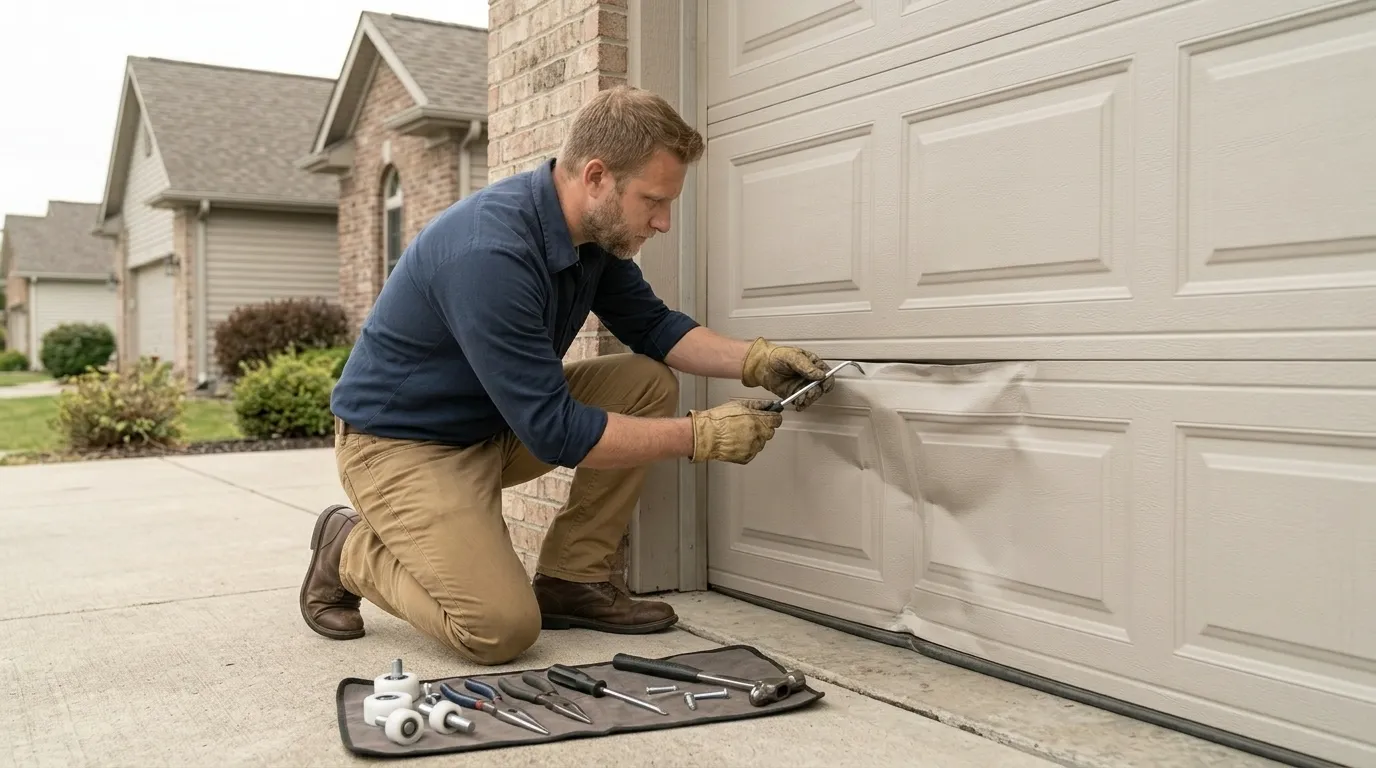
    Rollers and hinges get inspected next - on original hardware they're often worn enough to cause the grinding noise but not yet failed outright, which is the cheapest point to catch them. Track alignment gets checked and adjusted for the cold-weather contraction issue specifically, since a track that's a fraction of an inch off in January can bind the door even though it looked fine when it was warmer.

  2. Weatherstrip replacement protocol

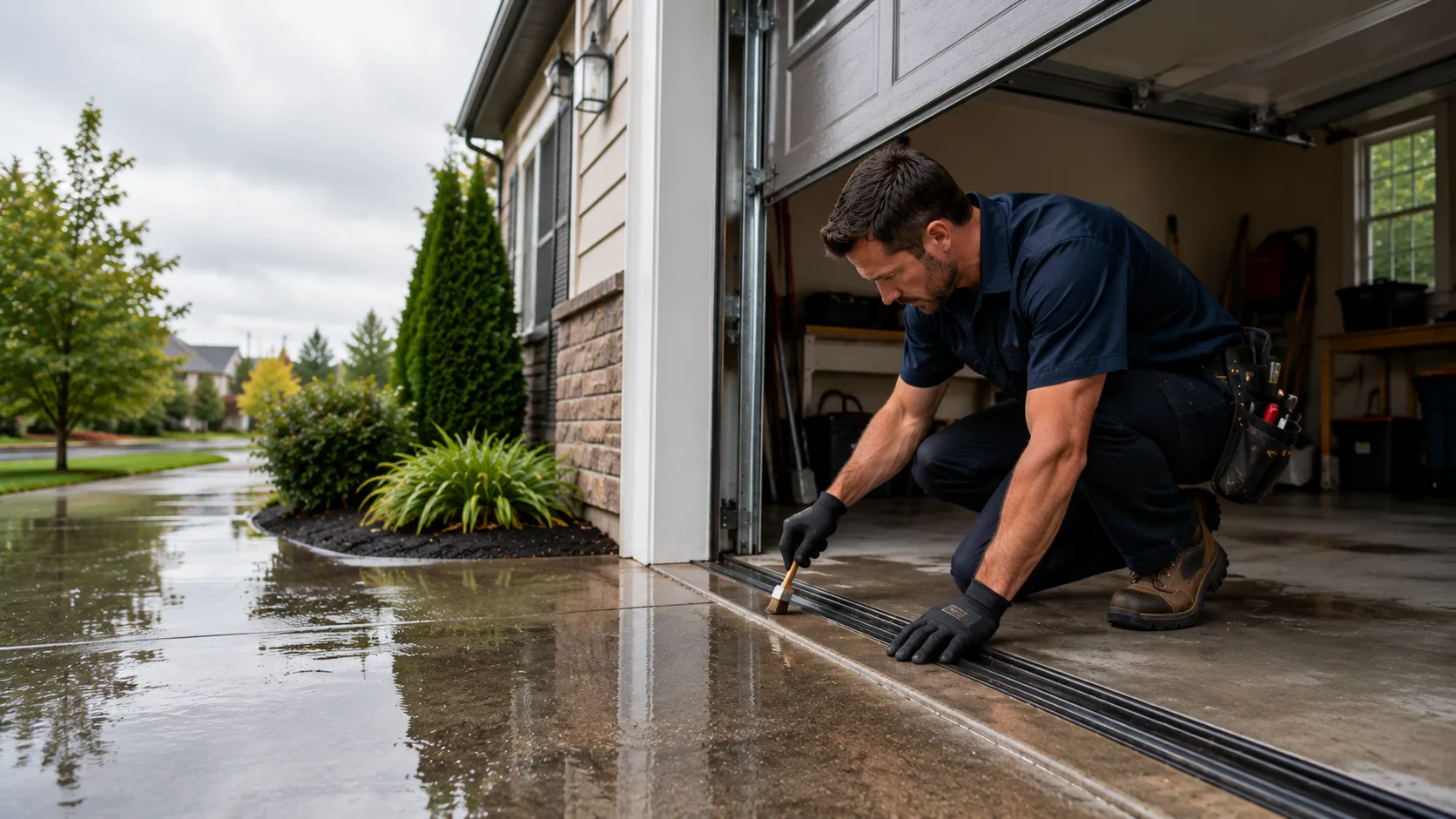
    Weatherstripping gets inspected for cracking and replaced if it's gone brittle - this is a small, inexpensive part of the visit but it's the one owners notice most once it's fixed. We'll also test the opener's force settings and safety sensors, since alignment drift is common on older tracks.

  3. Maintenance versus replacement decision

    Here's the honest limit: if the spring is original and already showing heavy wear, we're not going to tell you a lubrication and adjustment visit fixes that. That's a spring replacement, and pushing maintenance as a substitute for it just delays the inevitable and costs you a service call now plus a break-down call later.

Getting It Booked In

Booking

Getting It Booked In

If your door is original to a house built anywhere in that 1958-2010 range, or you've noticed grinding, a stiff track in cold weather, or a cracked seal, a maintenance visit now is cheaper than a snapped spring later. We work across the service area, so whether you're closer to Eastlake, Northglenn, or the Federal Heights side, we can get someone out to look at the specific wear pattern on your door rather than guessing over the phone.

Bring up the age of your house when you call - homes from the 1960s-70s wave need a different checklist than something built in the 2000s, and knowing which bucket you're in helps us bring the right parts on the truck the first time instead of a second trip.

Questions

Common questions

How often should I get garage door maintenance in this climate?

With a severe cold band affecting the whole area, the honest answer is before winter hits, every year, especially on original hardware from the 1960s-70s housing wave. Cold contracts metal and thickens lubricant, so a fall check catches the track and spring issues before freezing temps turn a minor adjustment into a stuck door.

My door is original to a house built in the 1970s - is that a problem?

Not automatically, but it means the spring, rollers, and cables have likely seen decades of hard freeze-thaw cycling without replacement. We'd check tension and wear specifically because hardware from that era is past its expected working life more often than newer installs.

Can maintenance fix a door that's grinding and slow?

Sometimes - worn rollers or a misaligned track from cold contraction are maintenance items. If the noise is coming from a fatigued torsion spring, though, maintenance won't fix that. We'll tell you straight which one it is rather than charge for a visit that doesn't solve it.

Do you cover areas outside Thornton itself?

Yes, we work across the wider service area including places like Northglenn, Federal Heights, Welby, and Commerce City. The service and checklist are the same - it's the housing age and local wear pattern on your specific door that changes the visit.

Ready when you are

Need a garage door sorted in Thornton?

Thornton Garage Door Pros repairs and installs garage doors, springs and openers in Thornton, CO and the surrounding area.

Call NowGet a quote