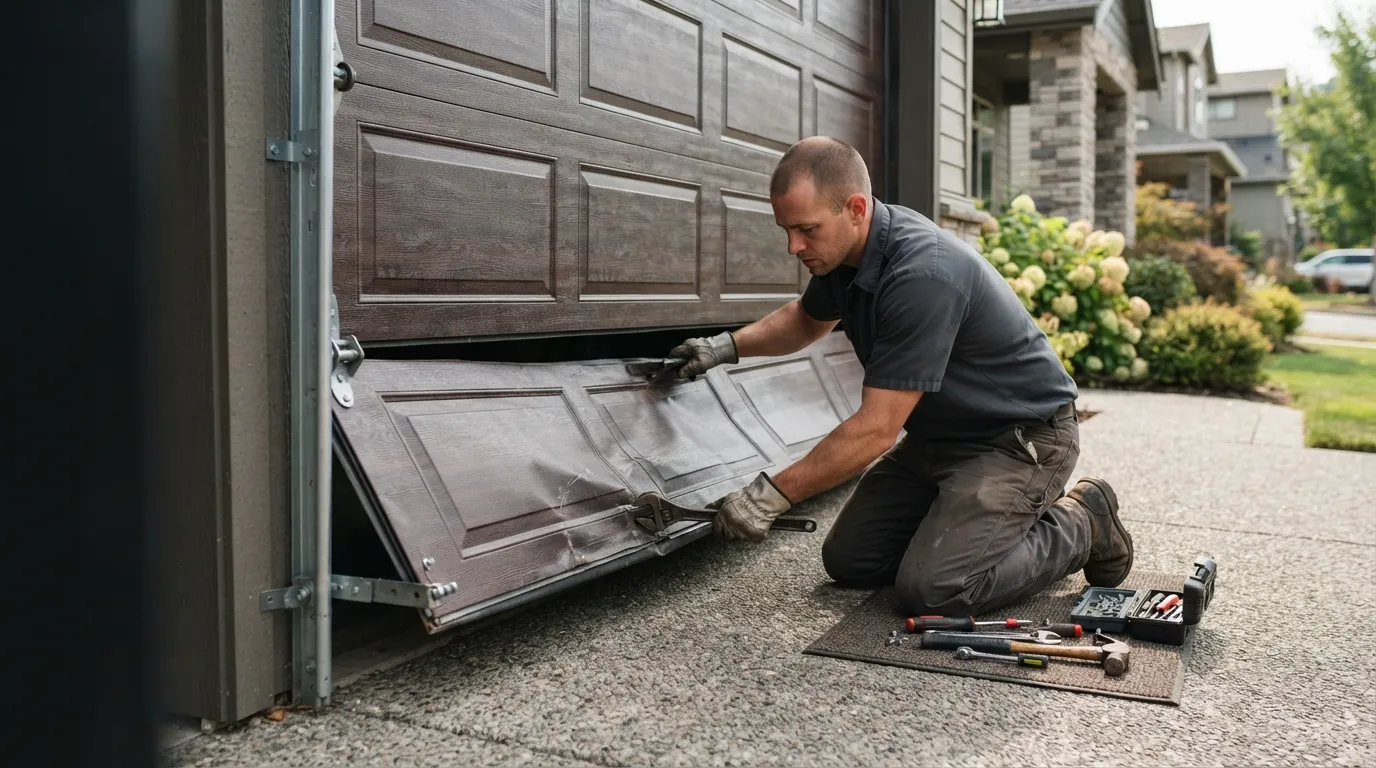
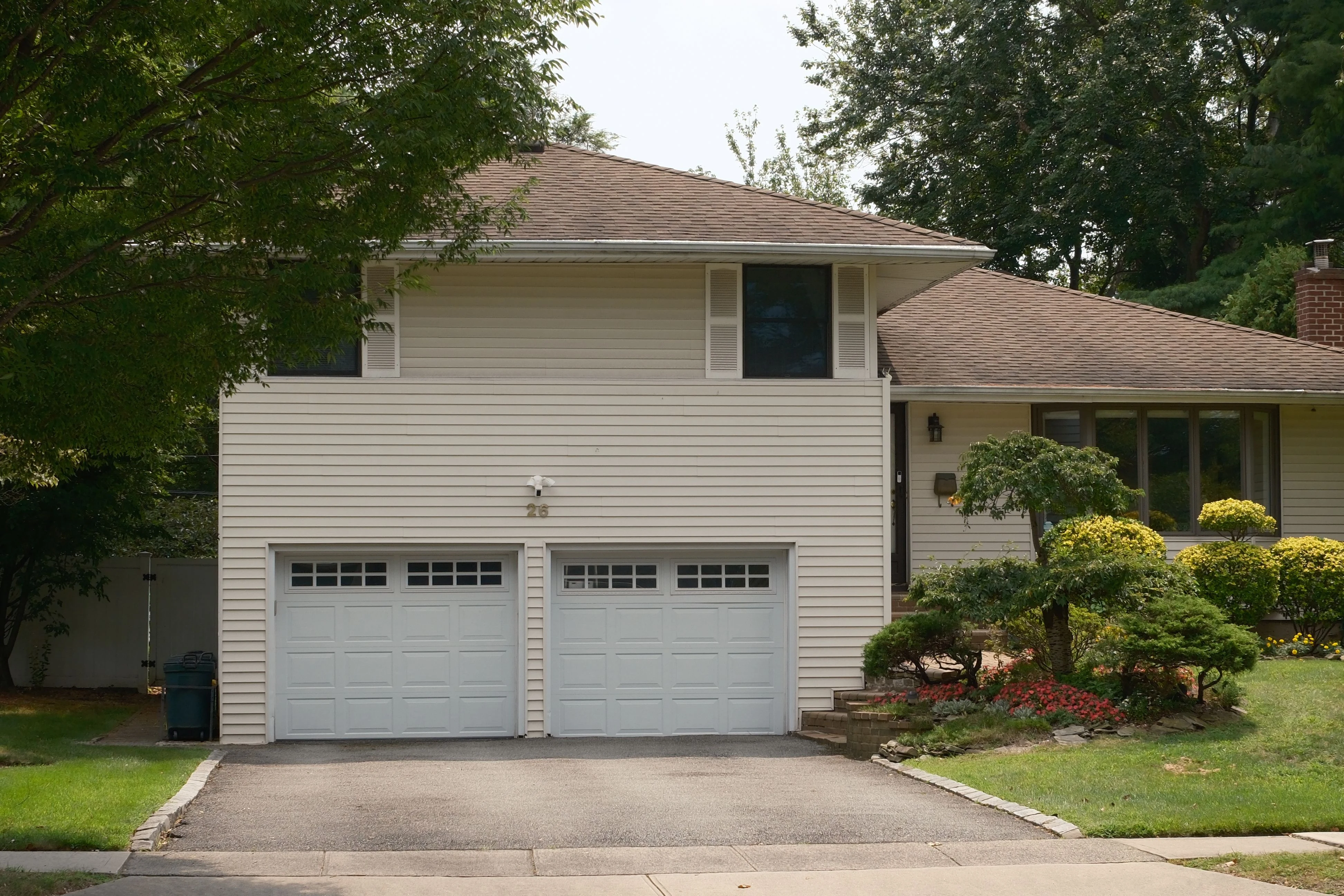
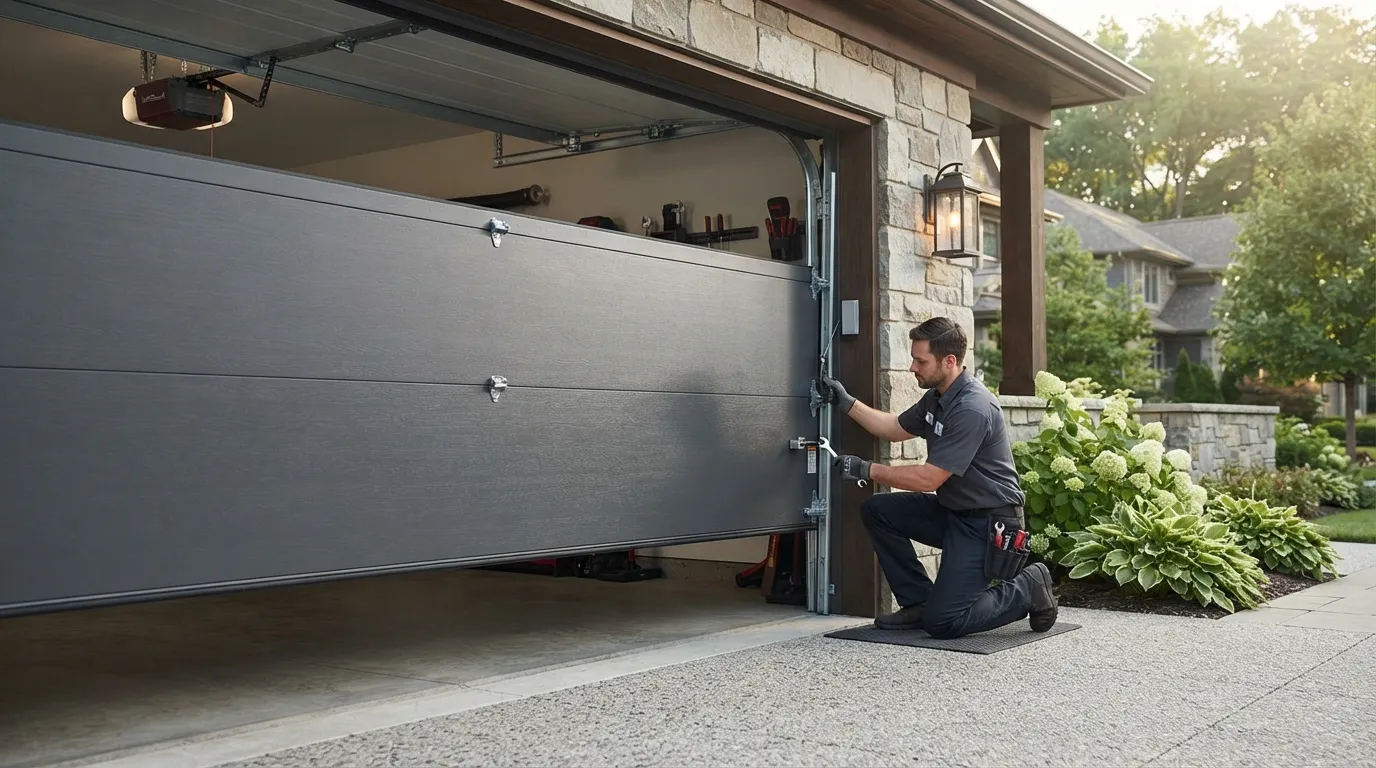
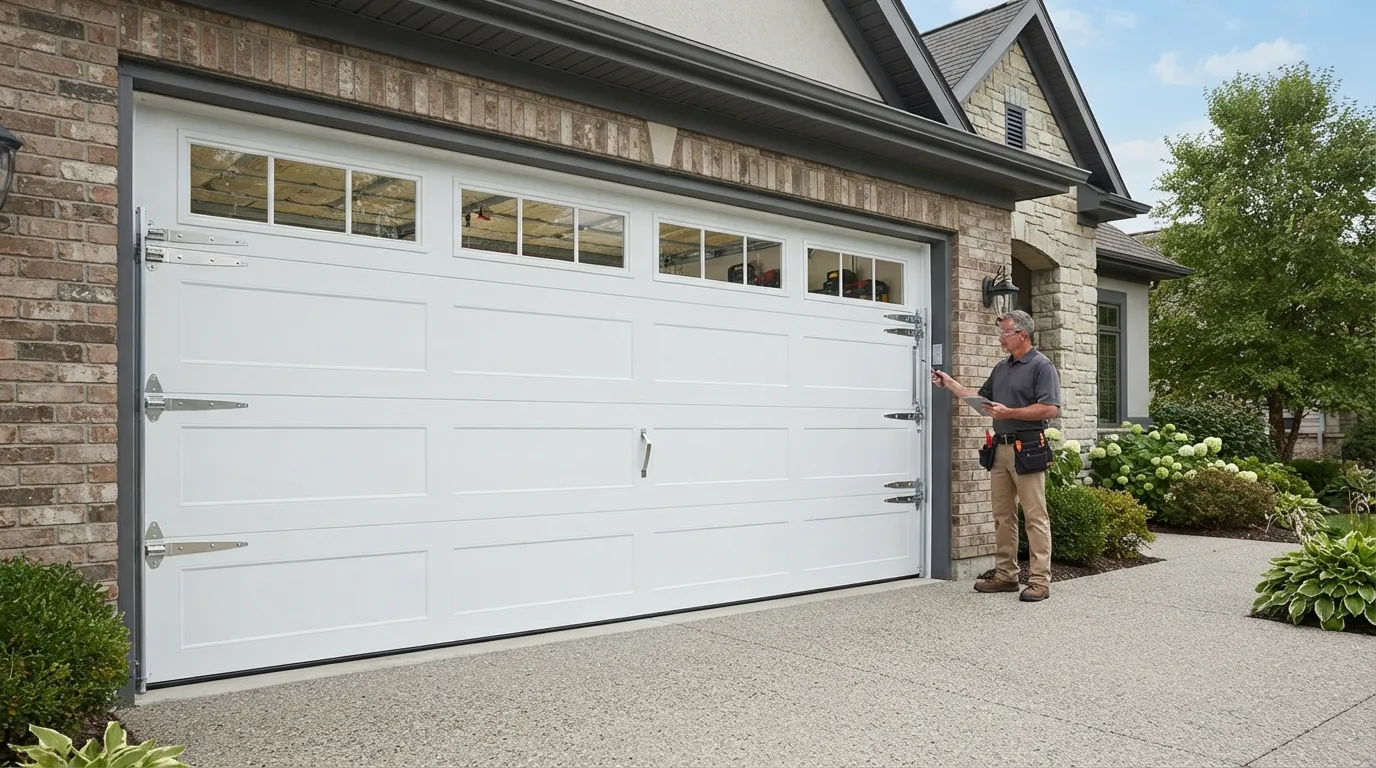
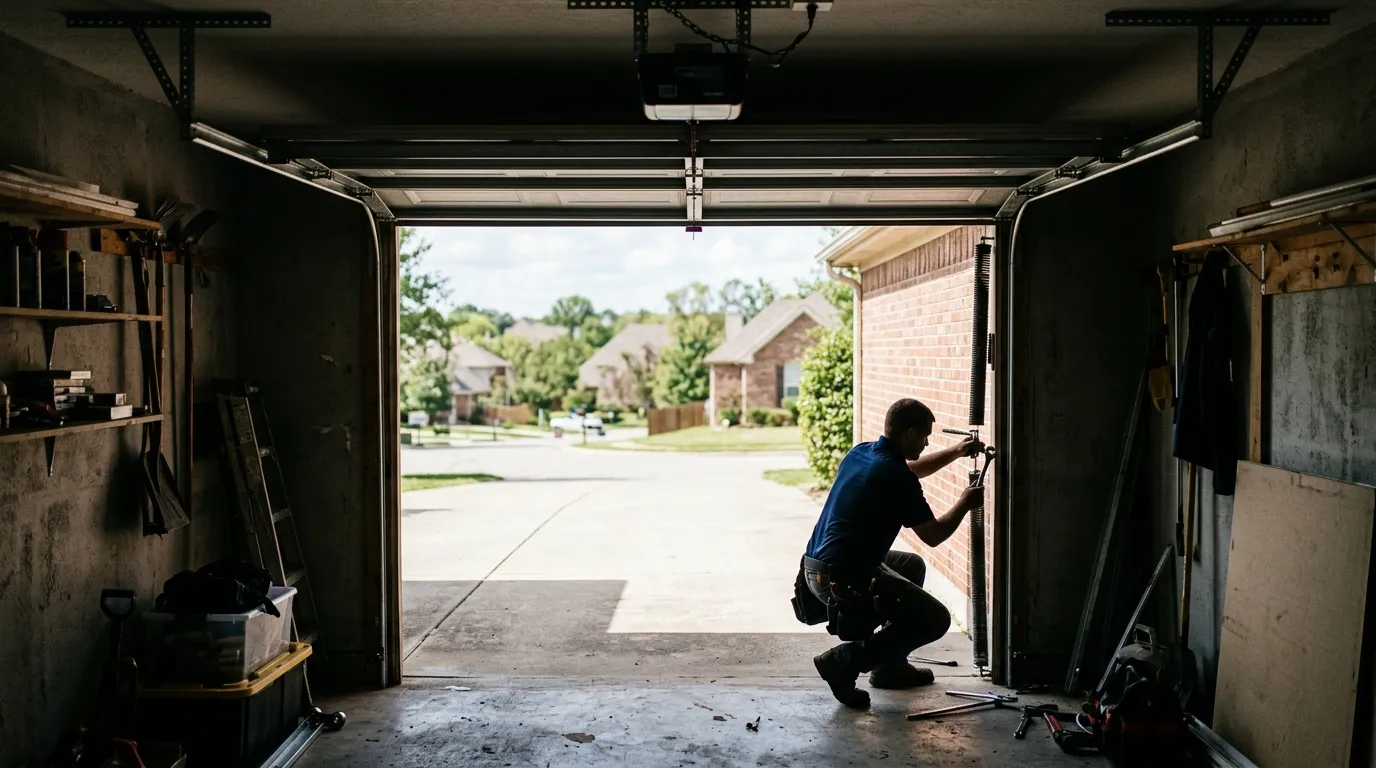
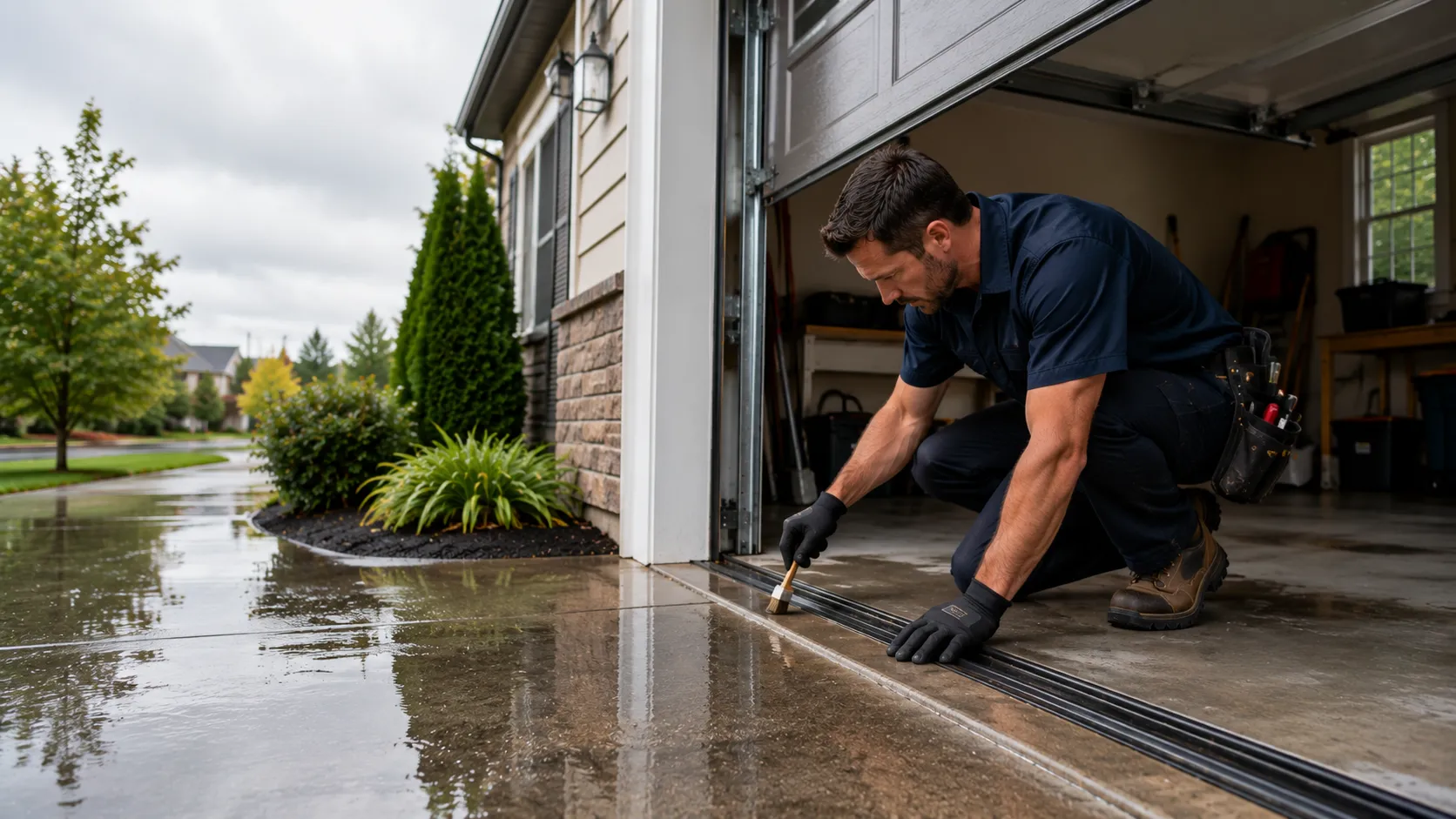
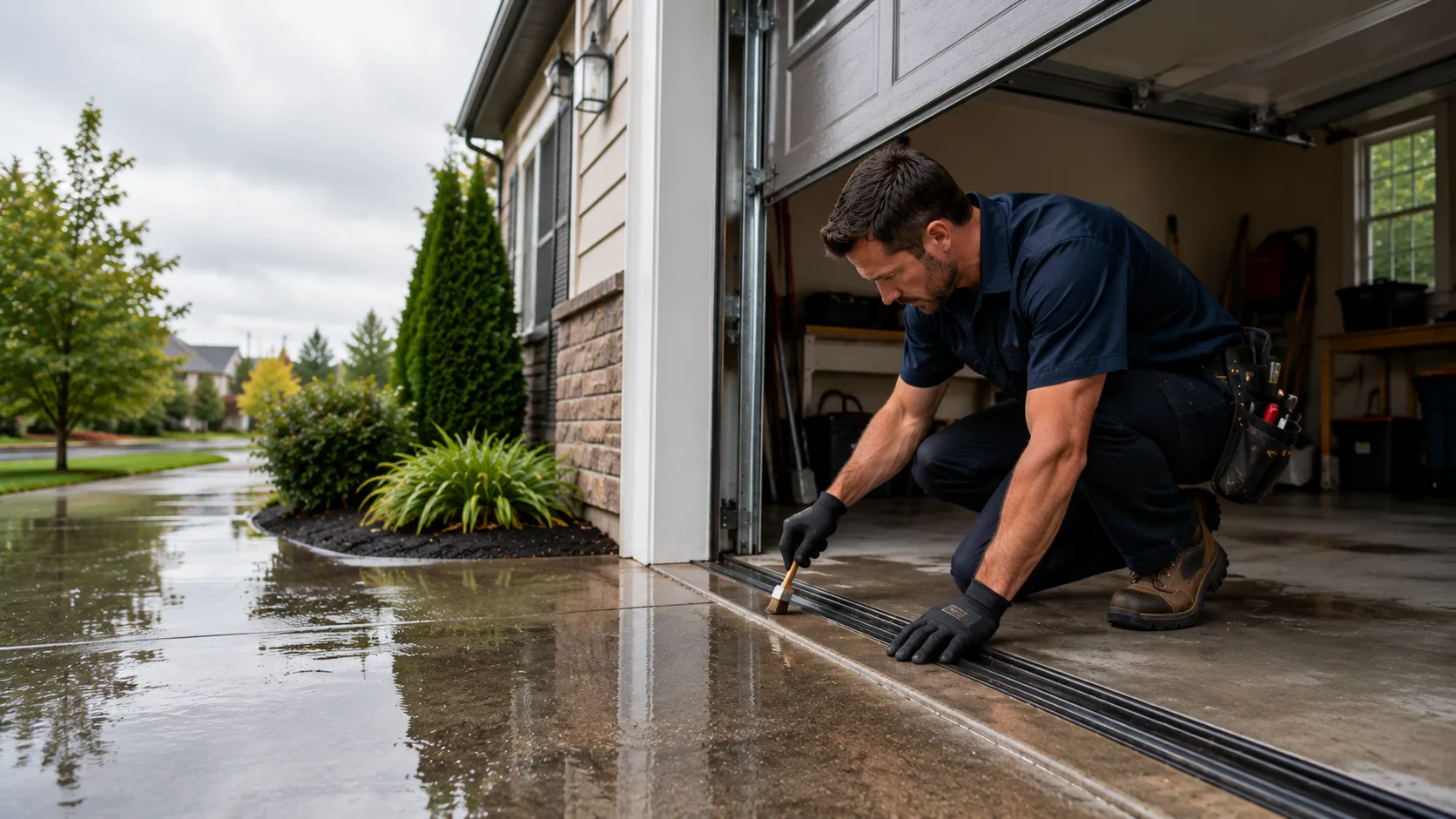
Most garage doors in this part of the Front Range went up between 1958 and 2010, with the bulk of that stock dating to the 1960s and 70s across the 32 communities we work in. Steel panels from that era weren't built with the insulation or coatings you'd see on a door today, and they've had decades of severe cold to work against them. When metal contracts hard in a deep freeze and then swells again on the next warm afternoon, seams flex, primer cracks, and rust gets a foothold at the bottom panel first - that's the one closest to snowmelt and de-icer runoff sitting against the slab. On older doors, a single bent panel from a mower, a slid-in trailer hitch, or built-up ice at the track can mean the whole section needs replacing, not just a patch job, because manufacturers stopped stamping that exact profile years ago. Homes built closer to 1979, the median year for this area, often have doors that are past the point where cosmetic fixes hold up through another cold season. That combination - old steel, a severe cold climate, and decades of freeze-thaw cycling - is why panel failure shows up here more than it would somewhere with milder winters or newer housing stock.