Torsion spring rupture
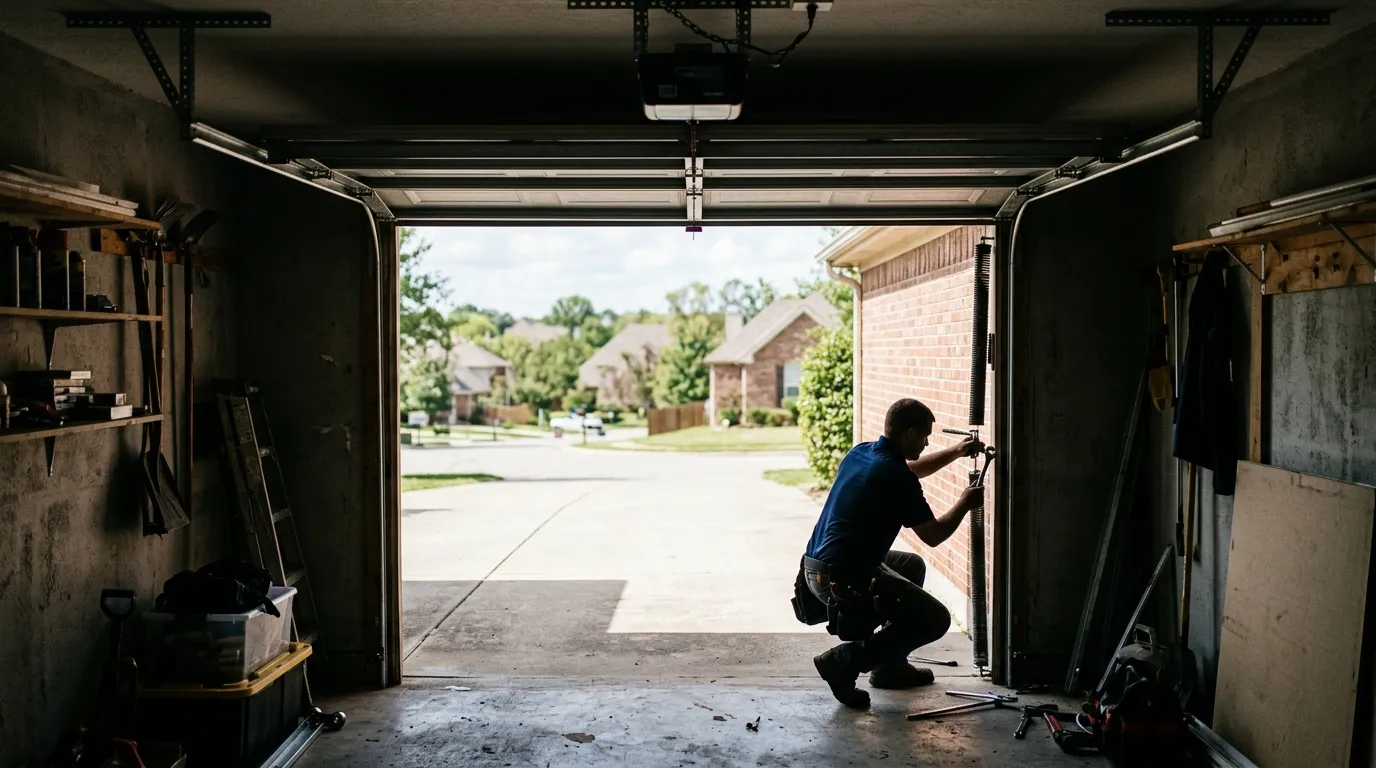
Sometimes you hear the bang first - a torsion spring snapping sounds like a gunshot in an enclosed garage, and it's usually followed by the door refusing to budge at all.
Thornton, CO
Torsion and extension springs on Thornton's 1958-2010 housing stock fail from repeated cold-to-warm cycling. Same-day spring repair, done right, across the service area.
Local causes
Most of the housing stock in this service area went up between 1958 and 2010, with a median year around 1979, and a lot of it clusters in that 1960s-70s wave across the 32 named areas we cover. That means a huge share of the doors we get called on still have the original torsion or extension spring setup, or a replacement from decades back that was never upsized when heavier insulated panels went in.
The climate is the other half of it. This is a severe cold band, and a spring under tension doesn't like big temperature swings. Steel contracts in the cold, the coil binds slightly tighter each cycle, and the wear that would take fifteen years in a mild climate happens in ten or twelve here. Add a garage that swings from below freezing overnight to well above by afternoon, and you're cycling the spring's metal fatigue faster than the door's age alone would suggest.
We're not saying every older door is a ticking clock. Plenty of 1970s torsion springs are still doing fine. But when a spring on a house from that era does go, it usually goes without warning, and it's rarely an isolated fluke - it's metal that's been flexing through forty-plus cold-to-warm cycles a year for decades.
Warning signs
The classic sign is a door that won't lift, or lifts a few inches and stalls, with the opener straining and clicking instead of moving.
Sometimes you hear the bang first - a torsion spring snapping sounds like a gunshot in an enclosed garage, and it's usually followed by the door refusing to budge at all.
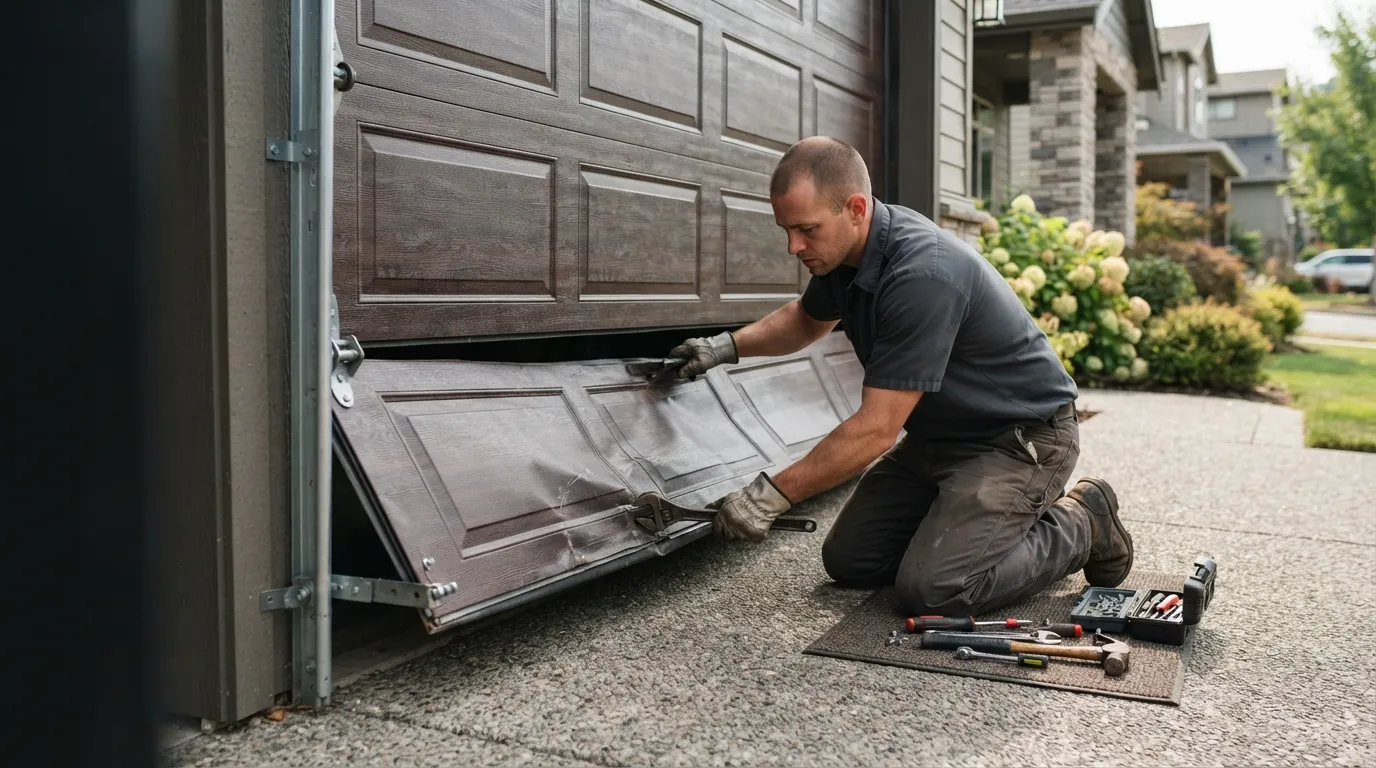
On older extension-spring setups (more common on the pre-1980 stock in this area), the failure mode is different: one side droops lower than the other, and the door hangs crooked in the track. That uneven pull is hard on rollers and hinges too, so a spring that's been sagging for weeks can take a few other parts down with it.
A quieter version: the door still opens, but it feels heavier than it used to, or the opener is working harder and hotter than it should. That's a spring losing tension gradually rather than snapping outright - still a repair, just not yet an emergency.
The repair
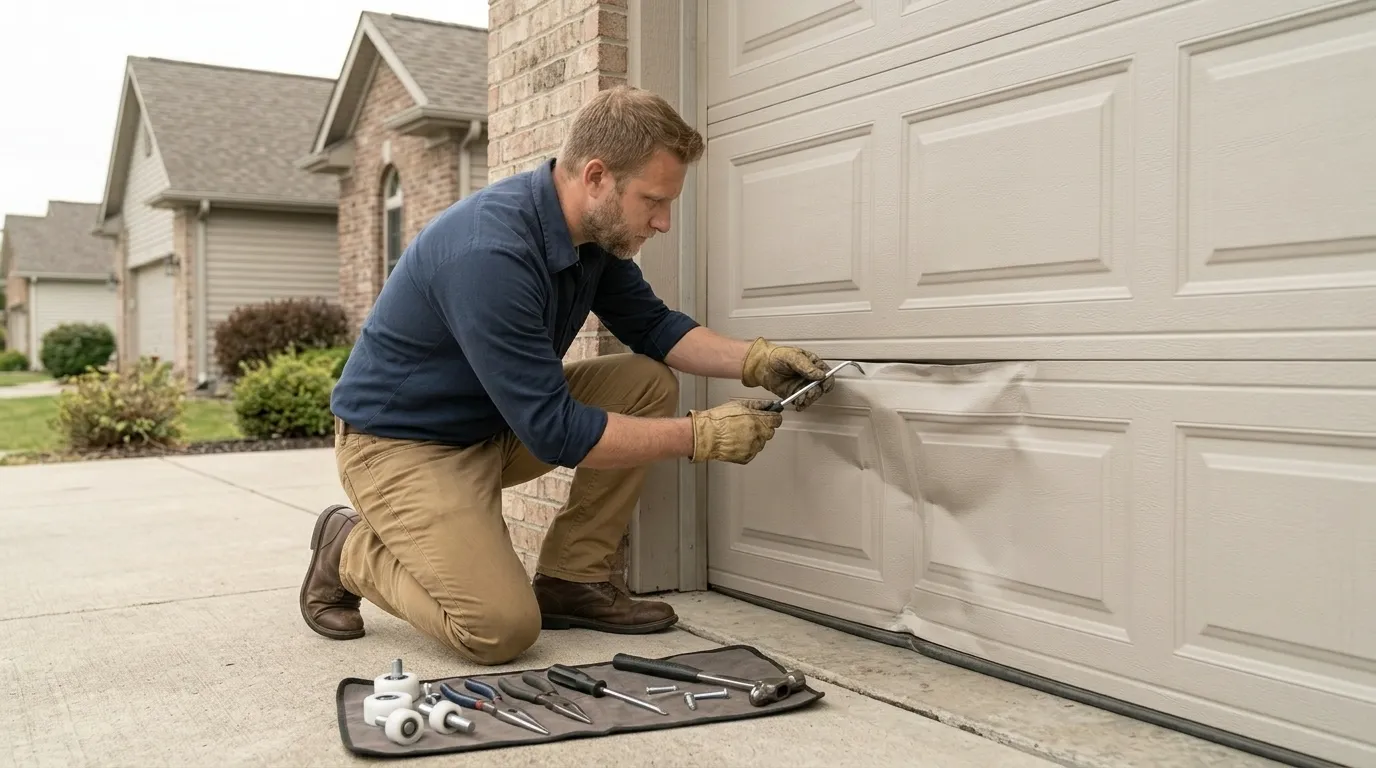
Spring replacement isn't a universal part-swap job. We measure the door's weight, wire size, coil diameter, and wind direction before ordering, because a spring rated for a lighter door will fail again fast, and one rated too heavy puts stress on the opener and the top panel.
On a lot of the 1960s-70s doors we see, the original hardware is single-spring torsion on a wood jamb, which sometimes needs a support plate before the new spring goes on - the wood has usually shifted a little over that many decades. We check for that rather than assuming a straight swap will hold.
We always replace springs in pairs on double-spring setups, even if only one broke. A ten-year-old spring next to a brand-new one just means you're back out here again in a year when the tired one gives out. That's not us upselling - it's the honest math on wear.
One limitation worth saying plainly: if the door itself has warped or the track is badly out of alignment from years of an unbalanced spring pulling on it, a spring swap alone won't fix the door. We'll tell you straight if that's the case before we start, rather than after.
Booking
A broken spring means the door stays down until it's fixed - it's not safe to force it open, and doing so can bend the track or drop the door on someone.
If you're stuck with the car inside or out, that's the first thing to tell us so we can prioritize the call. We cover Thornton and the surrounding service area out to about eighteen miles, from Northglenn and Eastlake close in to farther-out stops like Boulder and Englewood.
Wherever you're calling from in that range, the spring sizing and cold-cycle wear pattern we described above holds true - it's the same housing era and the same winters doing the work.
Have the door's rough age and whether it's one long spring across the top or two shorter ones on either side of the shaft - that alone speeds up getting the right part on the truck before we arrive.
Questions
We don't quote a flat number here because it depends on the door's weight and whether it's single or double spring, but we'll give you a firm price on-site before any work starts. Given the cold-cycle wear common in this area's older housing stock, we always check both springs even if only one has failed.
Torsion and extension springs fatigue gradually from repeated tension cycles, and in a severe cold climate like this one, that fatigue speeds up. The snap itself is sudden, but the metal has usually been weakening for months or years - there's rarely a single cause you'd have caught in advance.
You can, but we don't recommend it. If one spring failed from age, the other is on the same clock and usually gives out within a year or two. Replacing both at once costs less than two separate service calls and keeps the door balanced evenly on both sides.
No. A broken spring means the door's full weight is no longer supported, and forcing it open by hand or with the opener can bend the track, damage the opener, or cause the door to drop. Leave it closed and call for the repair rather than working around it.
Explore more
Ready when you are
Thornton Garage Door Pros repairs and installs garage doors, springs and openers in Thornton, CO and the surrounding area.