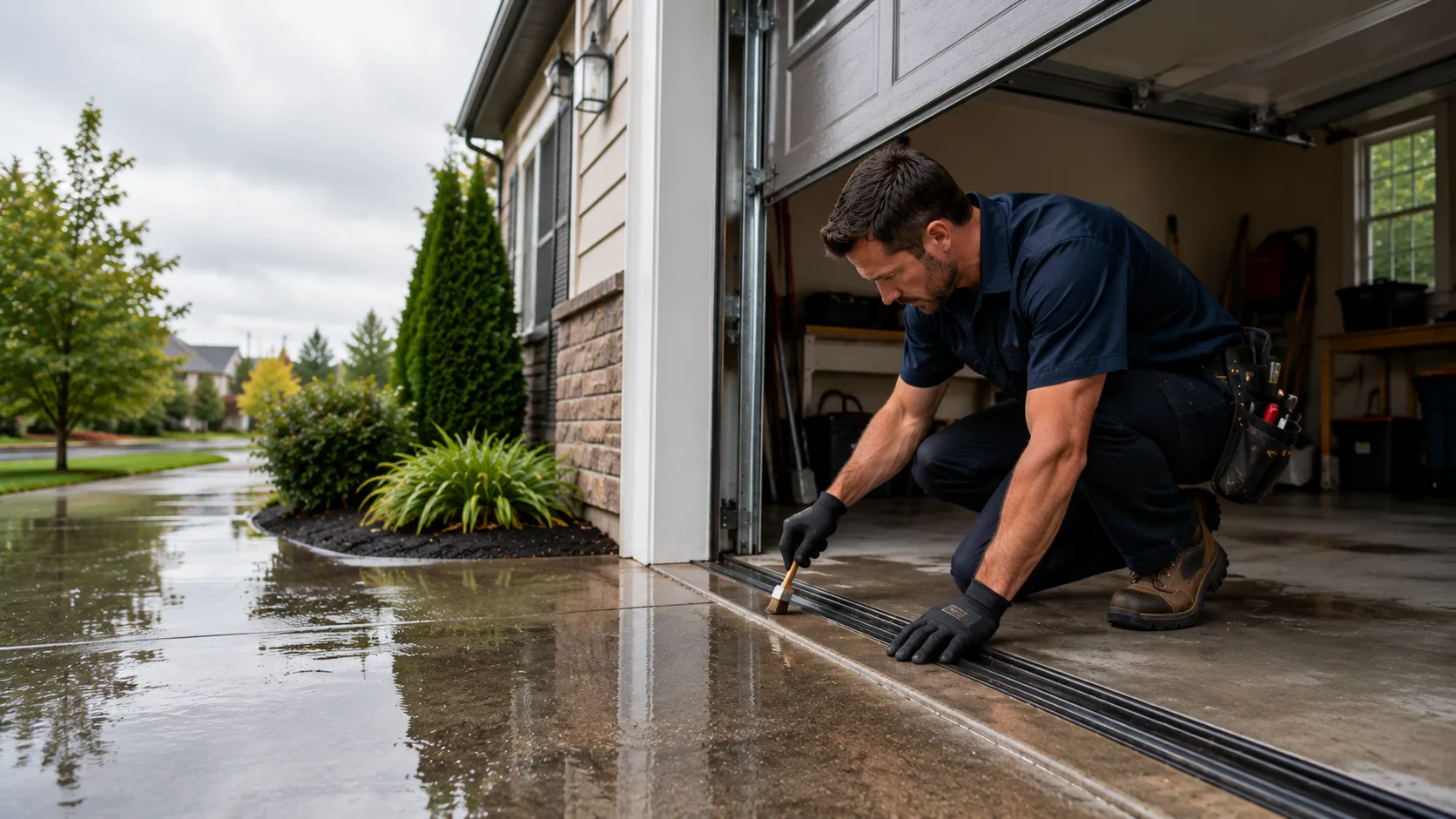
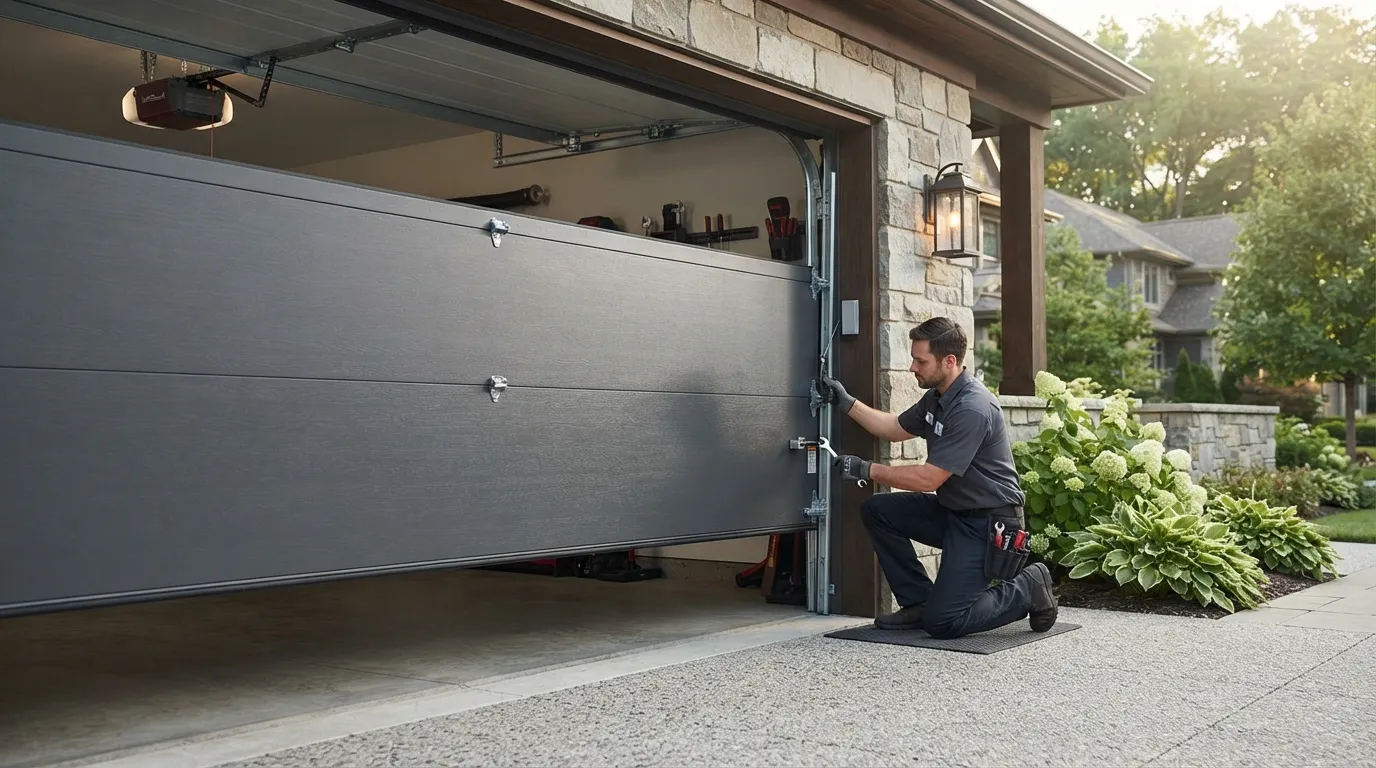
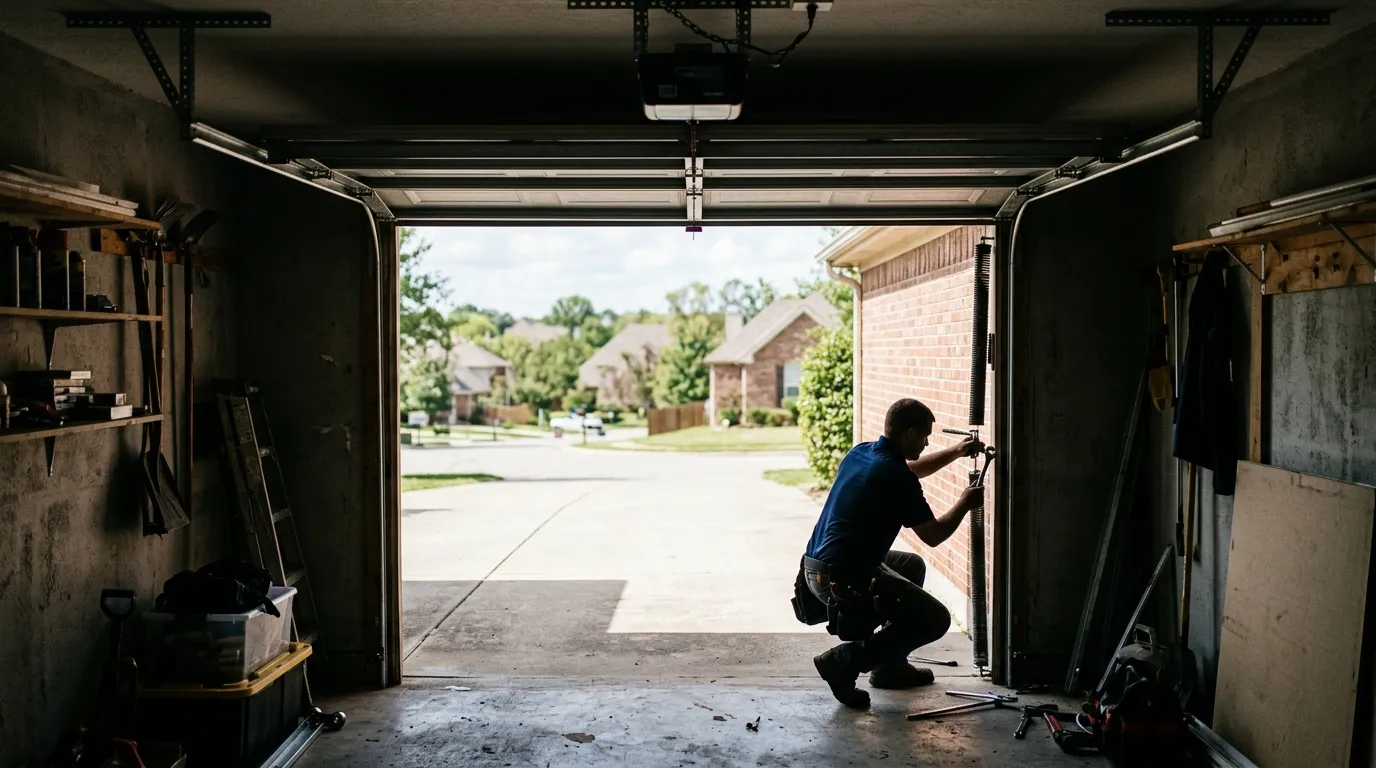
Most of Thornton went up between 1958 and 2010, with the median build year sitting around 1979 and the bulk of the stock dating to the 1960s and 70s across the 32 named areas that make up this side of the metro. That matters for installation because doors from that era were spec'd for a lighter build code and a milder assumption about winter loads than what the region actually delivers. Thornton sits in a cold, severe climate band, which means big daily temperature swings, hard freeze-thaw cycles, and wind-driven cold that a 1970s-spec door and its original track were never engineered to handle for fifty years straight. The panel might still look fine. The steel gauge, the insulation value, and the track tolerances underneath it are not fine, and they show it every winter when the door binds, sags, or won't seal at the bottom. A straight one-for-one swap using today's stock hardware on a fifty-year-old opening often doesn't fit right, because framing settled and jambs shifted over that many decades. That's the piece a lot of installs miss, and it's the piece that determines whether the new door lasts five years or twenty-five.