Mid-cycle hardware failure
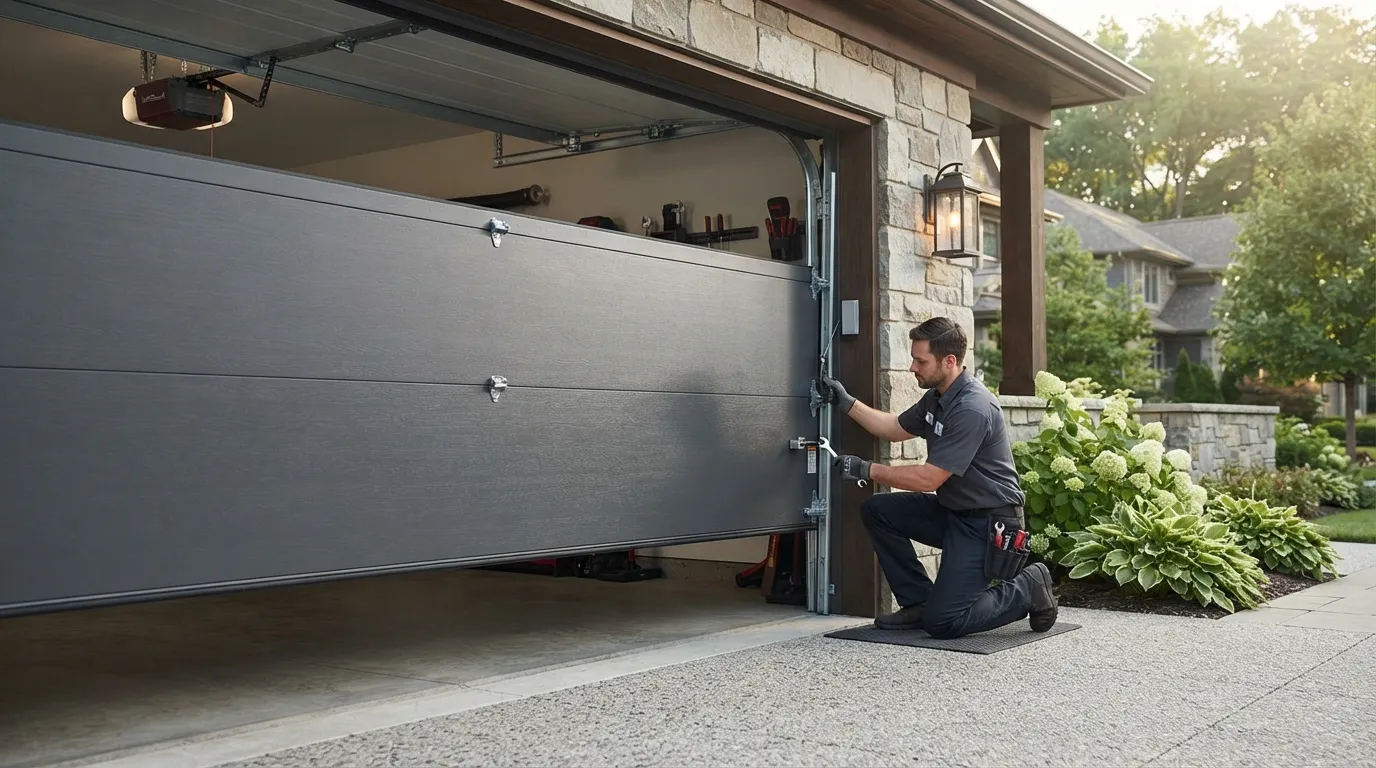
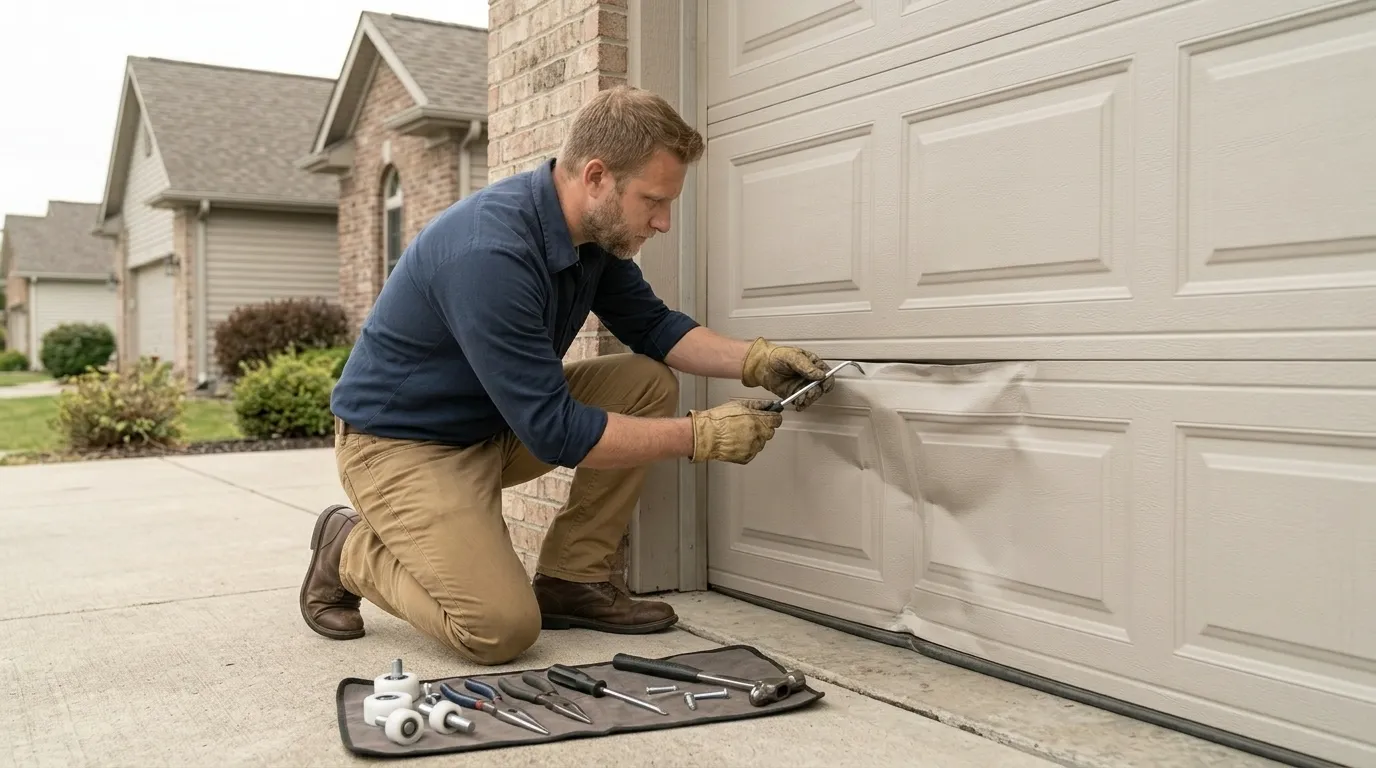
Sometimes a cable or roller gives way first and the door drops out of the track on one side mid-cycle, which is the call that scares people - the door is hanging, tilted, and won't move either way.
Thornton, CO
Doors built between 1958 and 2010 on Thornton's original tracks slip off alignment when cold hits. Here's why it happens and what the fix actually involves.
Local causes
Most of the housing stock in this service area went up between 1958 and 2010, with a lot of it clustered in the 1960s and 70s across the 32 named areas we run trucks through. That means original steel track, brackets that have never been re-shimmed, and rollers nobody's touched since the house was built. Track doesn't fail on its own - it fails because the door it's holding has picked up weight from moisture, or the slab it's bolted to has shifted a few degrees over fifty-plus years of freeze and thaw. This is a COLD-severe climate band. That combination - old track hardware plus real winter swings - is exactly what pushes a door off alignment. Steel contracts when it's cold, fasteners back out a hair, and a door that's been running slightly bent for years finally jumps the roller off the rail. In newer subdivisions built after 2000 the track is usually galvanized and better isolated from the slab, so it holds up longer. In the older pockets of this service area, off-track calls cluster hard in the first cold stretch of the year, and it's rarely a one-time fluke - it's the hardware finally giving up something it's been fighting for a decade.
Warning signs
Usually it starts small: the door runs crooked, one side drags a half-second behind the other, or you hear a scrape instead of a smooth roll.
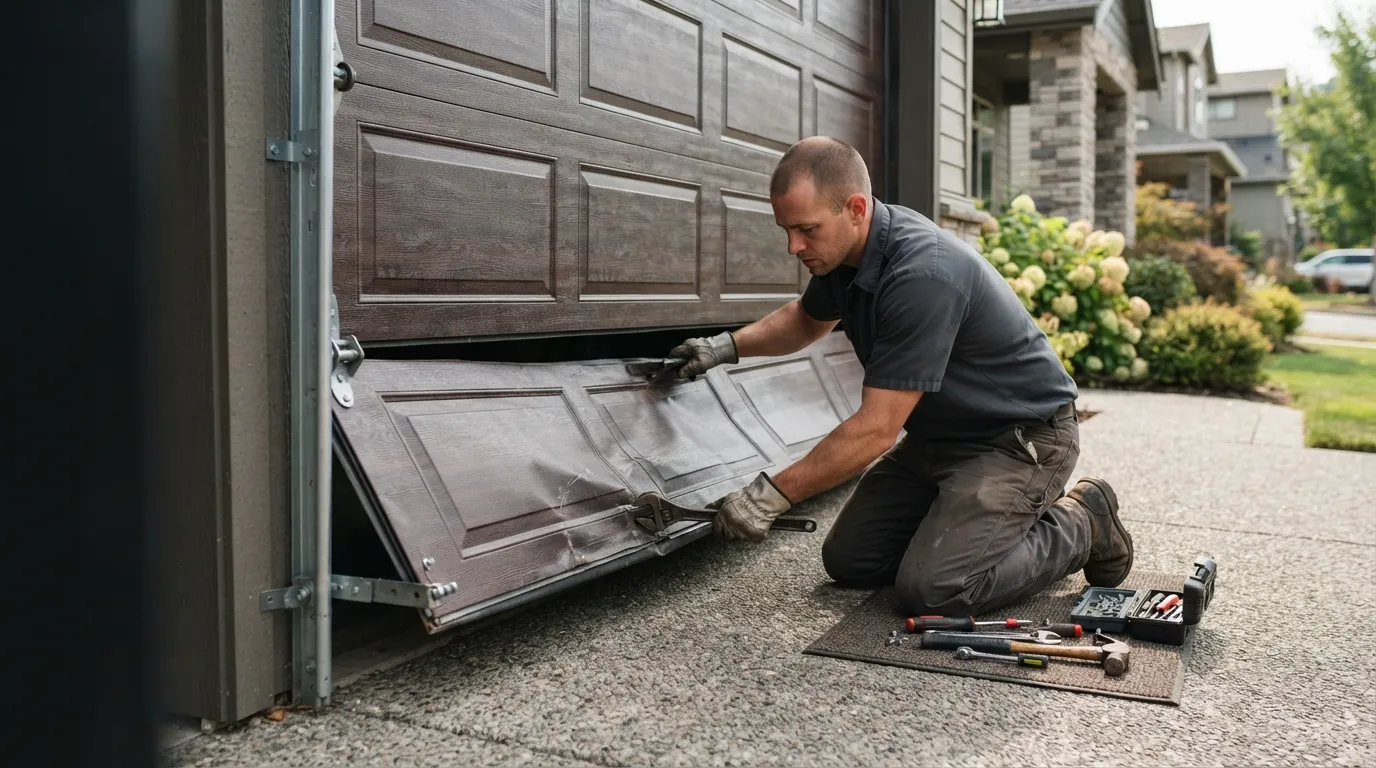
Sometimes a cable or roller gives way first and the door drops out of the track on one side mid-cycle, which is the call that scares people - the door is hanging, tilted, and won't move either way.
On older track systems common to this area's 1960s-70s builds, the brackets holding the rail to the framing can work loose from decades of temperature swing, so the whole rail shifts a fraction of an inch and the roller can't stay seated.
Cold makes it worse fast: metal track that's slightly bent runs fine in July and binds hard in January. If your opener is still trying to pull a door that's off track, you'll hear the motor strain or the gear grind - that's doing more damage every cycle it runs.
The repair
First step is getting the door off the opener and supported by hand before anything else moves, because a door that's jumped track can still fall.
From there it's a matter of figuring out whether the track itself is bent or just loose - loose gets re-anchored and realigned, bent gets replaced, since a track that's been kinked once will keep kinking at the same spot.
We check rollers and the bracket hardware at the same time, since on houses from this era's stock it's common for the roller that jumped to be the one that was already worn thin. If the spring system took the load wrong when the door dropped, that gets inspected too - a torsion spring under uneven tension is its own separate problem and not one to ignore.
Straight talk: if the track is bent in more than one place or the door panel itself got bent when it came off, patch repair isn't worth it. At that point you're paying for parts and labor twice instead of putting it toward a door that's actually straight.

Booking
If the door is hanging off one side or won't move, don't force the opener - that's how a cable snaps or a panel cracks. Call and describe what you're seeing: which side dropped, whether it's grinding, whether the opener is still trying to run it. We work across this service area's 32 named communities, from the closer-in stretches near Northglenn and Eastlake out through the farther towns on our list, and the fix is the same conversation everywhere - what's the hardware, what's the age of the house, what's the door doing right now. Get us the details up front and we can usually tell you over the phone whether this is a same-visit track repair or something bigger.
Questions
No. A door off track can still be under spring tension or hanging on one roller, and moving it wrong can drop it on you or snap a cable. Support it, don't force the opener, and call it in.
Steel track and hardware contract in cold, and this area sits in a climate band with severe winter swings. Track that's already slightly bent or loose from decades of use is far more likely to let a roller jump when metal tightens up in the cold.
Not always. Sometimes it's a worn roller, a loose bracket, or uneven spring tension that pulls the door crooked until it jumps. We check all three before deciding what actually needs replacing.
A lot of the housing in this service area was built between 1958 and 2010, with heavy concentration in the 60s and 70s. Original track and brackets on those houses are well past the point where wear is normal, not surprising.
Explore more
Ready when you are
Thornton Garage Door Pros repairs and installs garage doors, springs and openers in Thornton, CO and the surrounding area.