
Dual-opener multi-decade routine
Doors with two openers, or with hardware that's been ignored for a decade, take longer because we're not just greasing parts - we're finding what's already starting to fail.
Westminster, Thornton
Maintenance for Westminster's 1980s-era garage doors, serviced from Thornton 7 miles away. What a tune-up costs, what it skips, and when to stop fixing and replace.
Timing
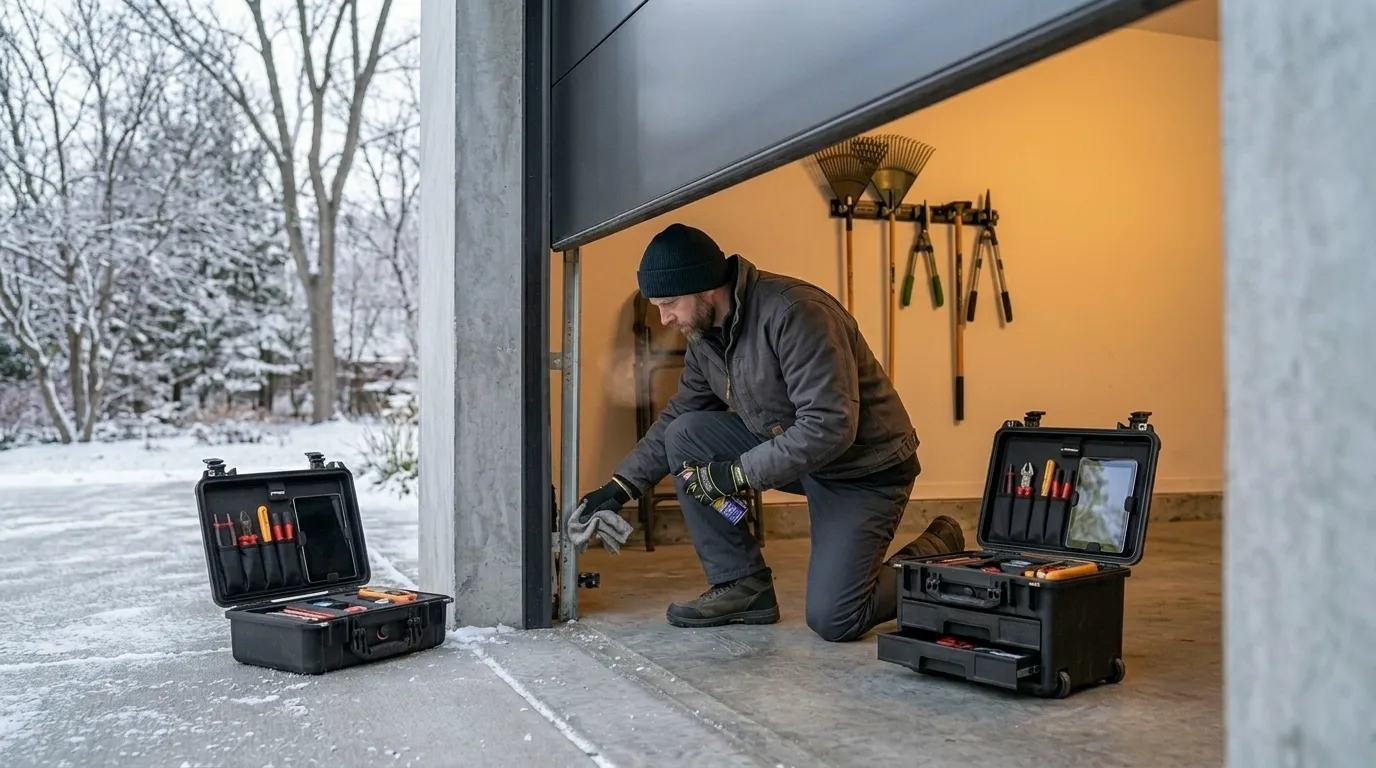
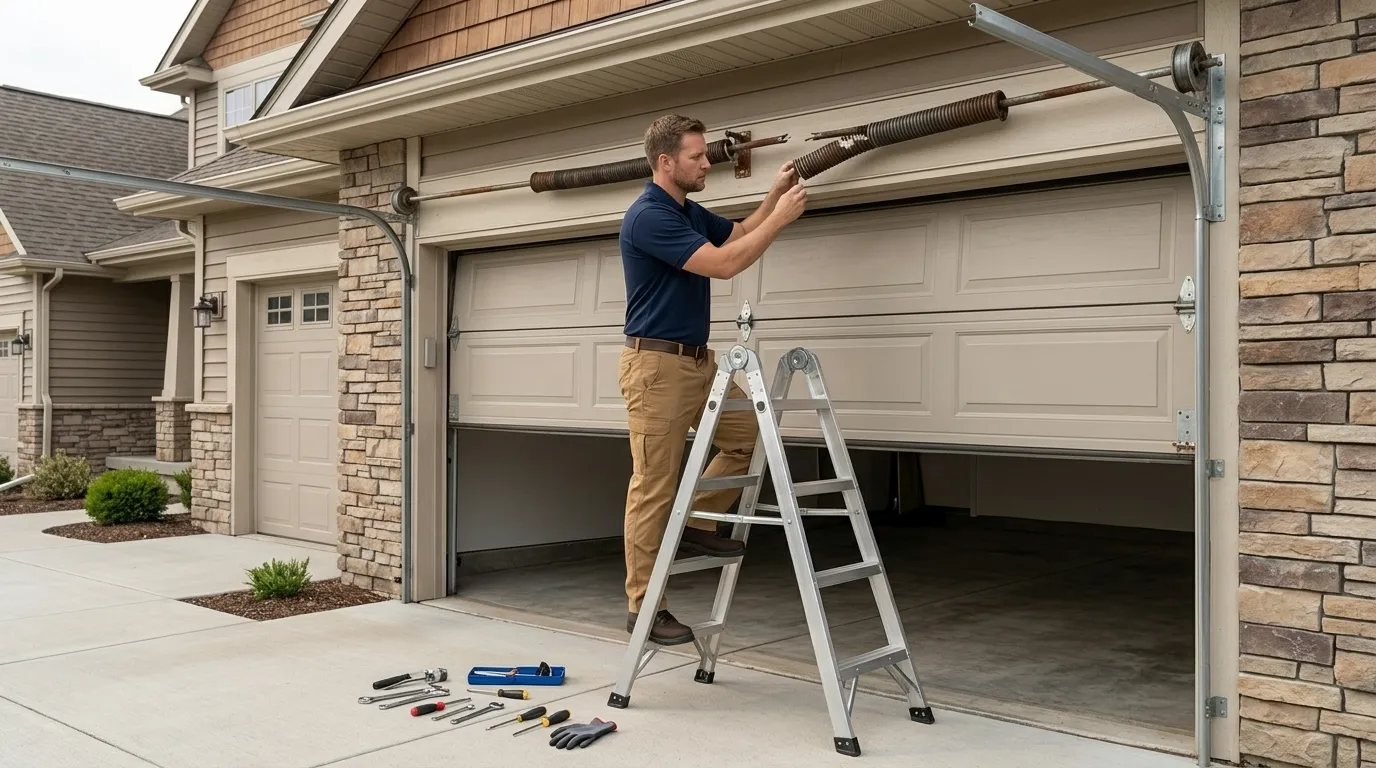
A standard maintenance visit runs on the door in front of us, not the calendar. Most single doors on steel torsion hardware take under an hour: lube the rollers and hinges, check spring tension, tighten the track bolts that work loose over years of cycling, and test the opener's force and travel limits.
Doors with two openers, or with hardware that's been ignored for a decade, take longer because we're not just greasing parts - we're finding what's already starting to fail.
Westminster's housing stock centers on 1987, which puts a lot of doors and openers into the age where the original hardware is still doing the job but the lubrication and adjustment schedule has usually lapsed.
That's a longer first visit than a house that's had annual service since new. We travel from Thornton, about 7 miles out, so we don't stage a same-day arrival window here the way a shop with a Westminster location might - plan the appointment, not the walk-in.
Pricing
Westminster's median household income sits at $96,145, a little above the wider service area's $93,818, and that number matters more than people think when a door starts acting up.
At that income level, a $150-200 tune-up is an easy yes and a $1,200 full replacement is a real decision, not an emergency purchase. The math we use with homeowners here: if the door and opener are original to a house built around 1987, the springs and cables are past any reasonable service life even if they haven't broken yet, and a tune-up buys time, not a reset.
If the opener's motor or logic board is failing rather than the mechanical hardware, replacement usually beats repair because parts for a 35-plus year old opener are getting hard to source at all, let alone quickly.
We don't carry a fixed price list in this write-up - every quote depends on what's actually on the door - but the income figure tells us most owners here can afford to fix things properly instead of patching around a bad spring.
DIY or pro
Lubricating hinges and rollers with a garage-door-specific grease, and visually checking cables for fraying, is fine to do yourself and worth doing between our visits.
What isn't fine is touching the torsion spring. A wound torsion spring holds enough stored force to break a bone or worse, and that risk doesn't scale down just because the door looks old and tired instead of new.
Owners in houses from the late 1980s often have the original torsion setup, which means the spring has had decades to fatigue even if it's never audibly failed. If you can hear a grinding or scraping sound from the track, or the door hangs unevenly when disconnected from the opener, stop and call - that's a cable or roller problem, not a lube problem.
The honest limit here: we don't do panel painting or cosmetic touch-up work as part of a maintenance visit. That's a separate job, and we'll say so rather than bill for it.
Watch-outs
On a door built to the 1987 median common in Westminster, the failure points are consistent: torsion springs losing tension unevenly, which shows up as a door that's harder to lift on one side than the other; galvanized cables fraying at the drum where they've rubbed for decades; and center hinges that have stretched their mounting holes from years of the door racking slightly out of square. Openers from that era, if original, are chain-drive units whose logic boards and drive gears are past typical service life - we still service some of these, but replacement parts are limited. A less obvious problem: weatherstripping at the bottom panel that's hardened and cracked, letting drafts in without an obvious visual sign from inside the garage. None of these are emergencies on their own, but they compound. A spring that's 10% out of balance puts more load on the opener, which shortens the opener's remaining life - the kind of chain reaction a maintenance visit is built to catch before it becomes a Saturday morning door that won't open at all.

Local causes
This is a cold-severe climate, and steel torsion springs lose a measurable amount of tension in hard winter cold - not because the spring is failing, but because cold steel behaves differently than warm steel. A door that closed evenly in September can start binding on one side by January, and owners often read that as a broken spring rather than a seasonal tension shift that a proper adjustment corrects. Grease that was fine in summer thickens in winter and stops doing its job on rollers and hinges right when the door is cycling through the widest daily temperature swings of the year.
Explore more
Ready when you are
Thornton Garage Door Pros repairs and installs garage doors, springs and openers in Thornton, CO and the surrounding area.