
50-year-old spring hardware lifespan
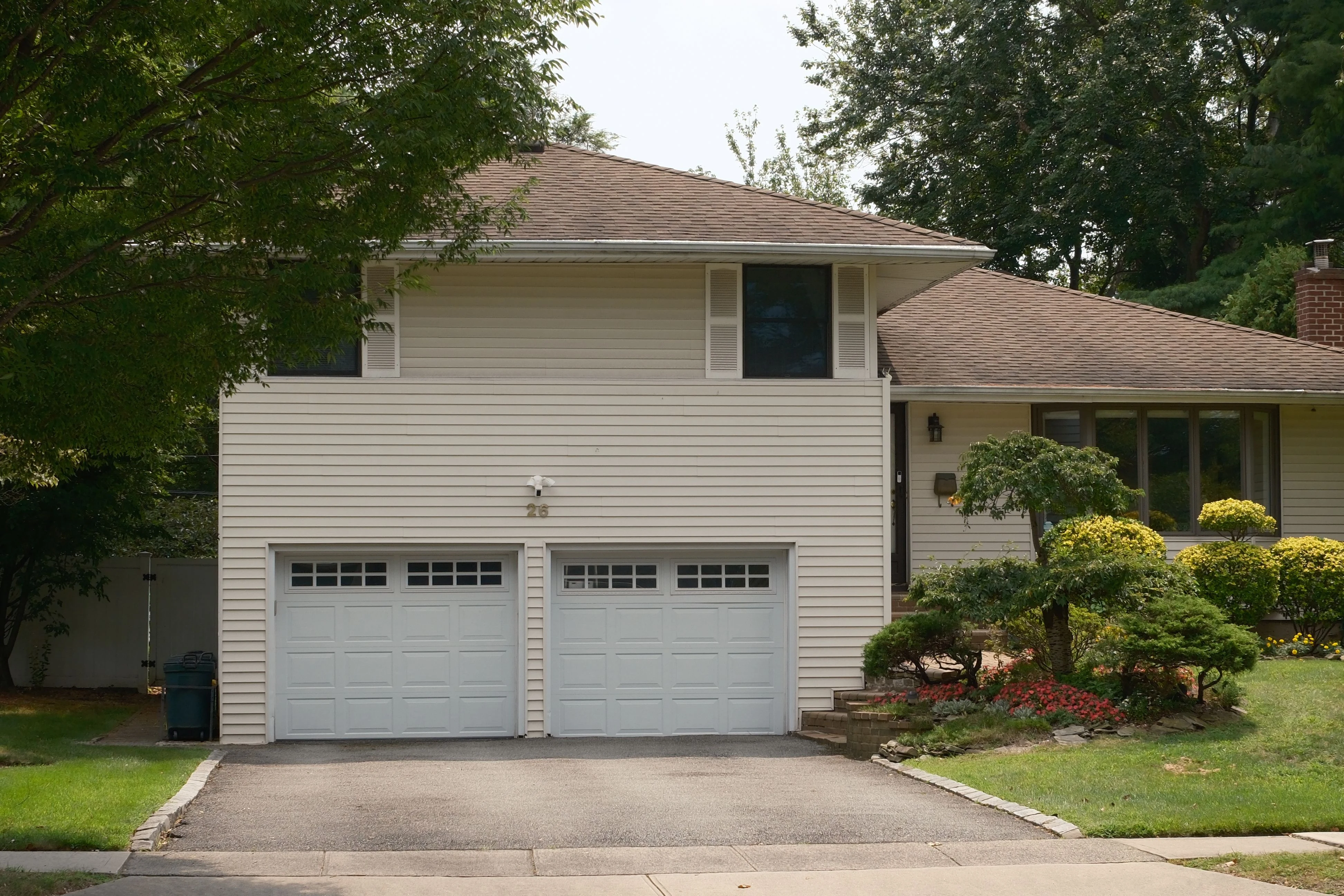
On a house built around 1974 - which is close to the middle of this area's 1960s-70s stock - the original torsion spring and the steel rollers it was built with are now roughly fifty years old.
Welby, Thornton
Welby's median income runs lower than the wider service area, which changes the repair-or-replace math on a 1974-era door. Maintenance from Thornton crews who know the hardware.
Watch-outs
Welby's median household income sits at $78,375, well under the $93,818 median for the wider service area. That gap matters more than it sounds like it should, because it's the line that decides whether a homeowner here fixes a spring or replaces a whole door.
On a house built around 1974 - which is close to the middle of this area's 1960s-70s stock - the original torsion spring and the steel rollers it was built with are now roughly fifty years old.
Cables fray at the drum end. Rollers seize in tracks that were never lubricated after installation. None of this is unique to Welby, but the age of the housing here means it's already happening, not something waiting to happen ten years out.
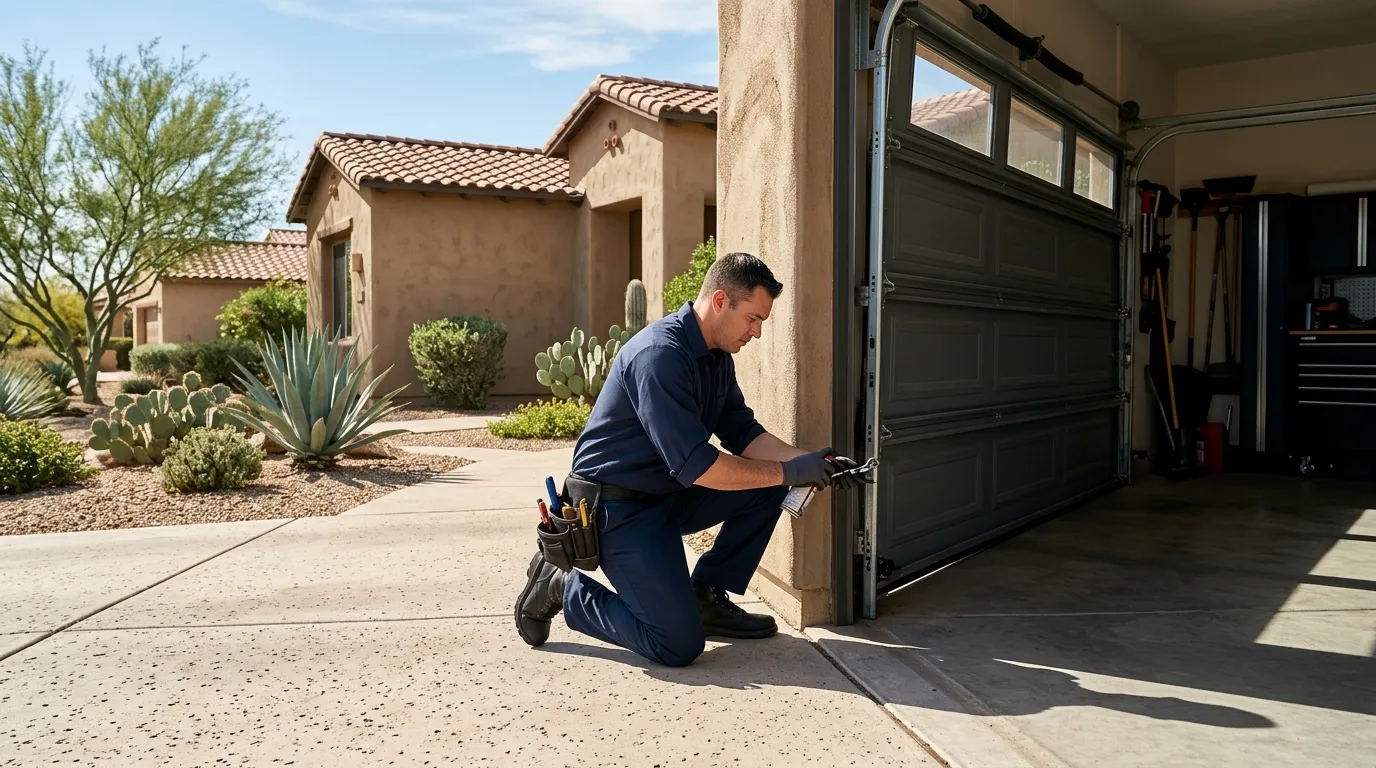
The common failure on these older setups is a spring that's lost enough tension that the opener strains to lift the door, then trips its own safety reversal halfway up. Homeowners often assume the opener is bad. It usually isn't. It's a $30-40 spring problem wearing an opener's symptoms, and catching it before the spring snaps fully saves the cable and the drum too.
The repair
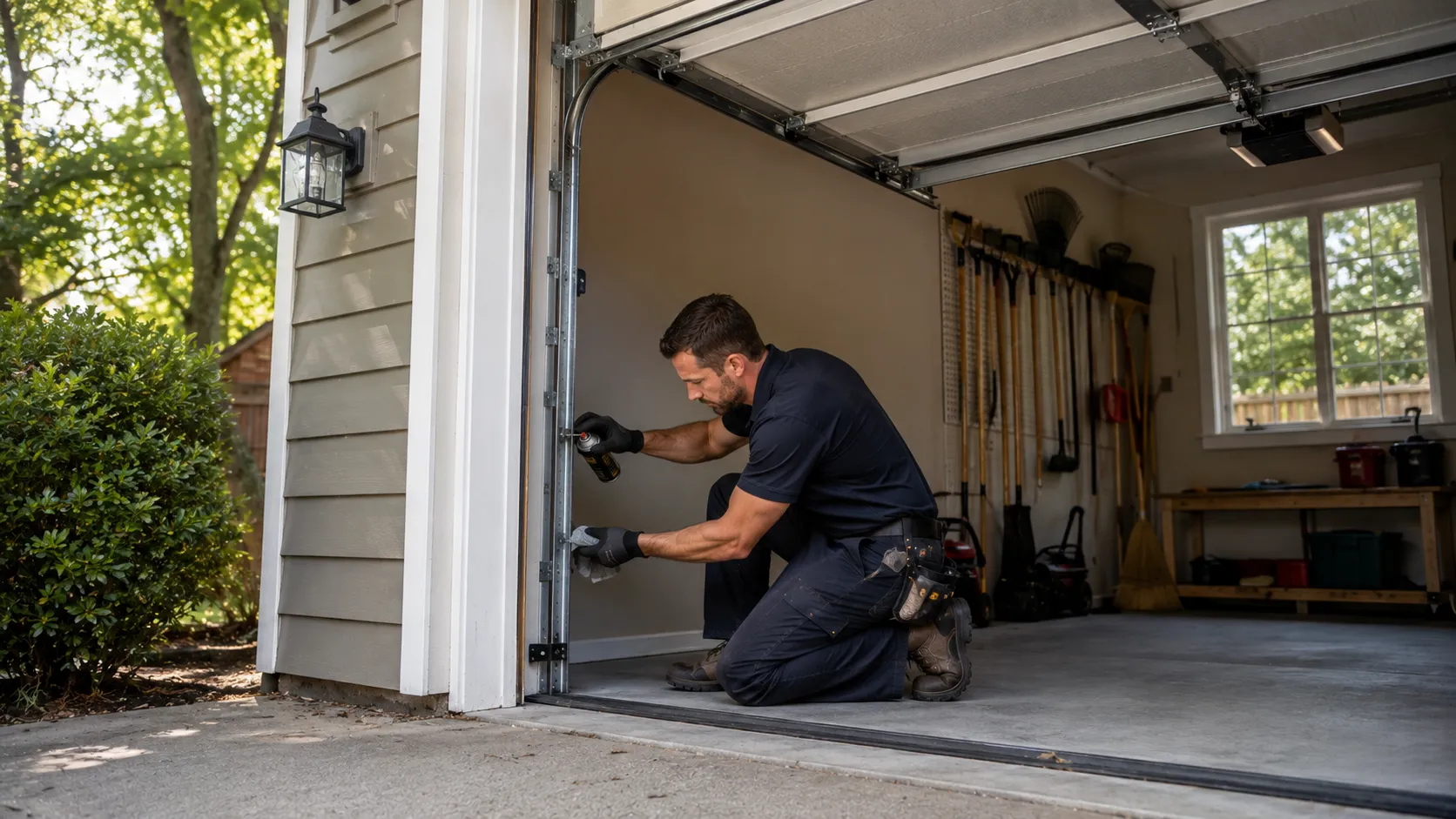
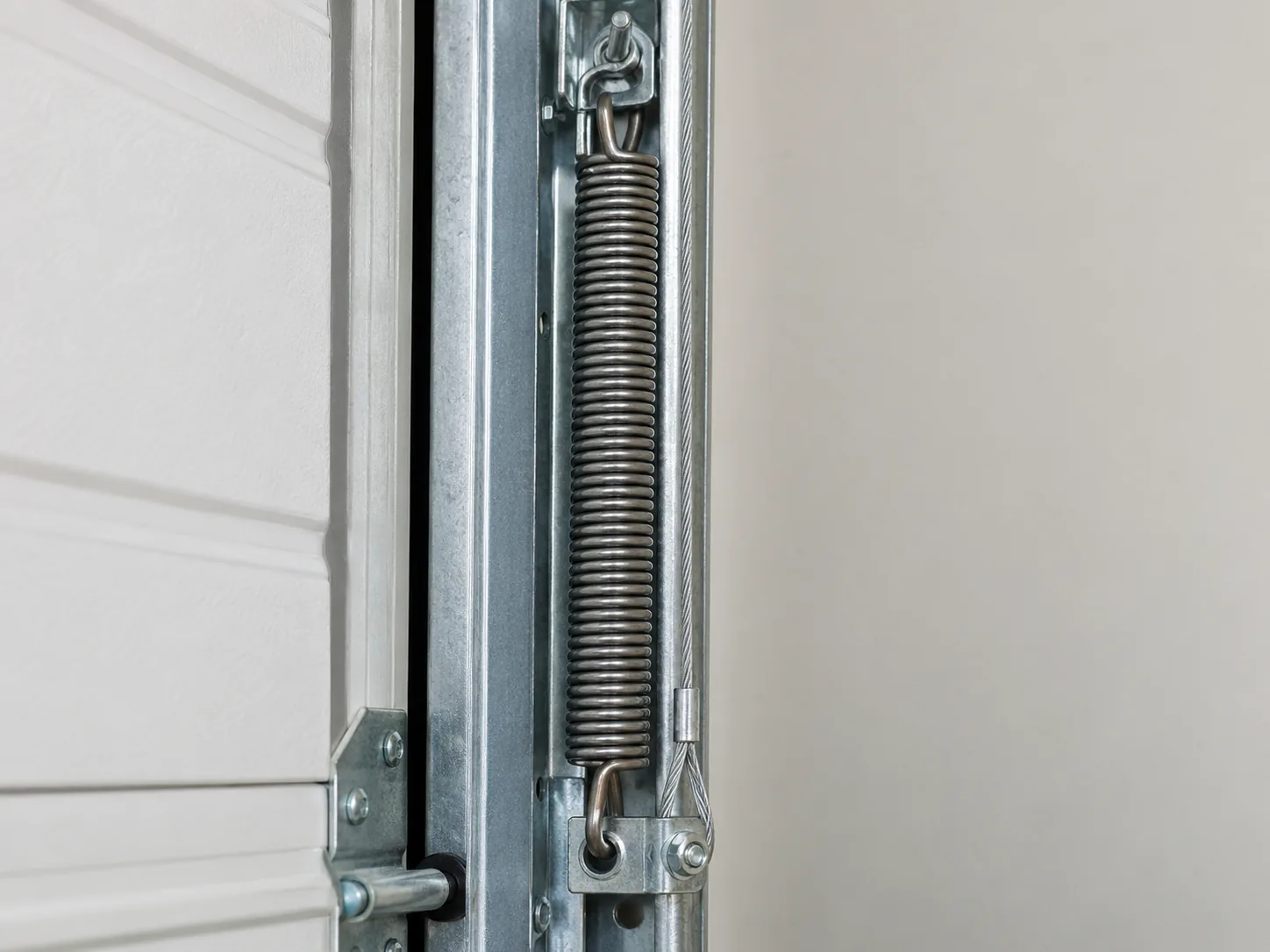
Maintenance on a door this age starts with the spring - checking wind tension, inspecting for rust pitting on the coils, and confirming the cable drums aren't cracked.
Then it's the track: 1970s builds used steel roller tracks that warp over decades of temperature swings, and a track even slightly out of plumb wears rollers unevenly on one side. Rollers get pulled and checked for flat spots, not just oiled and left.
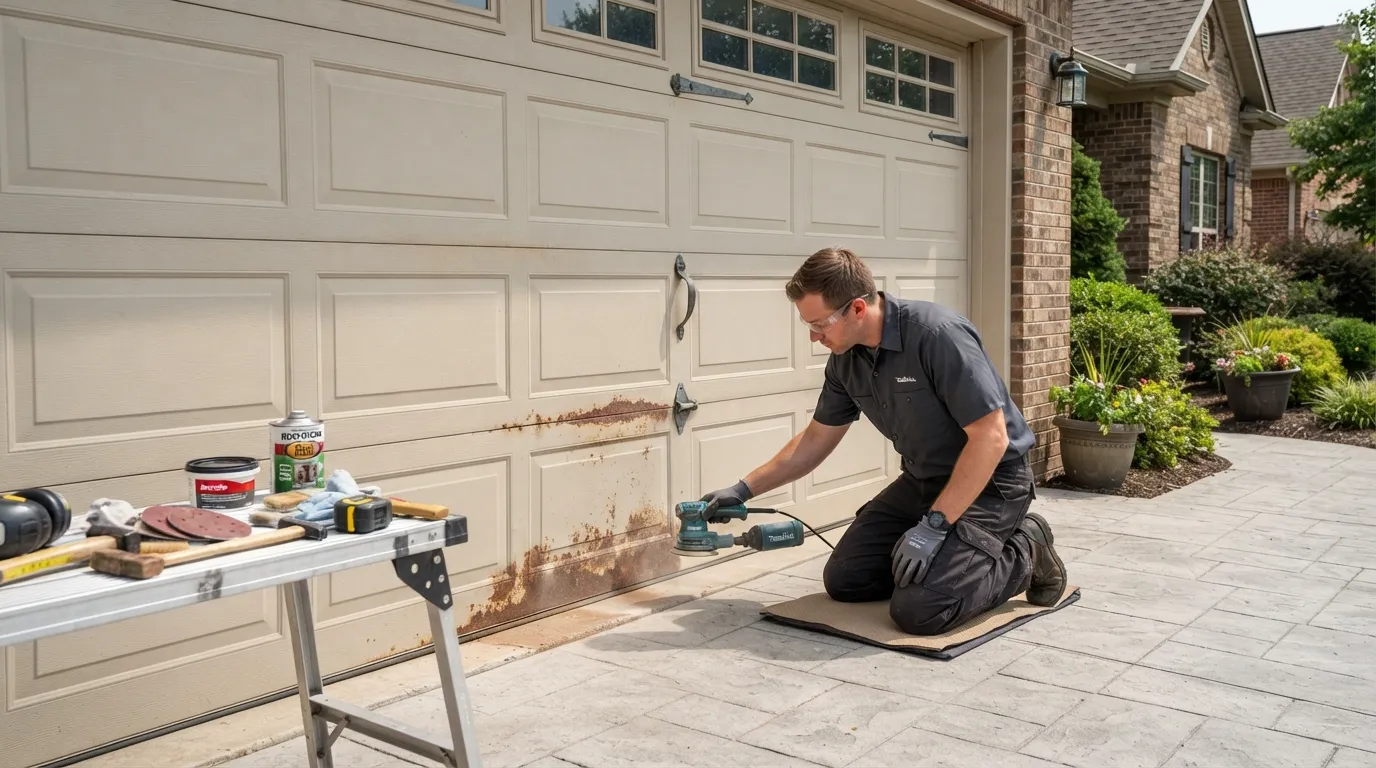
Hinges get torqued back down since panel sag loosens them over time. We also check the bottom seal and weatherstrip, since a door built in the mid-1970s almost certainly has had that seal replaced at least once and the track alignment underneath it can shift when that happens.
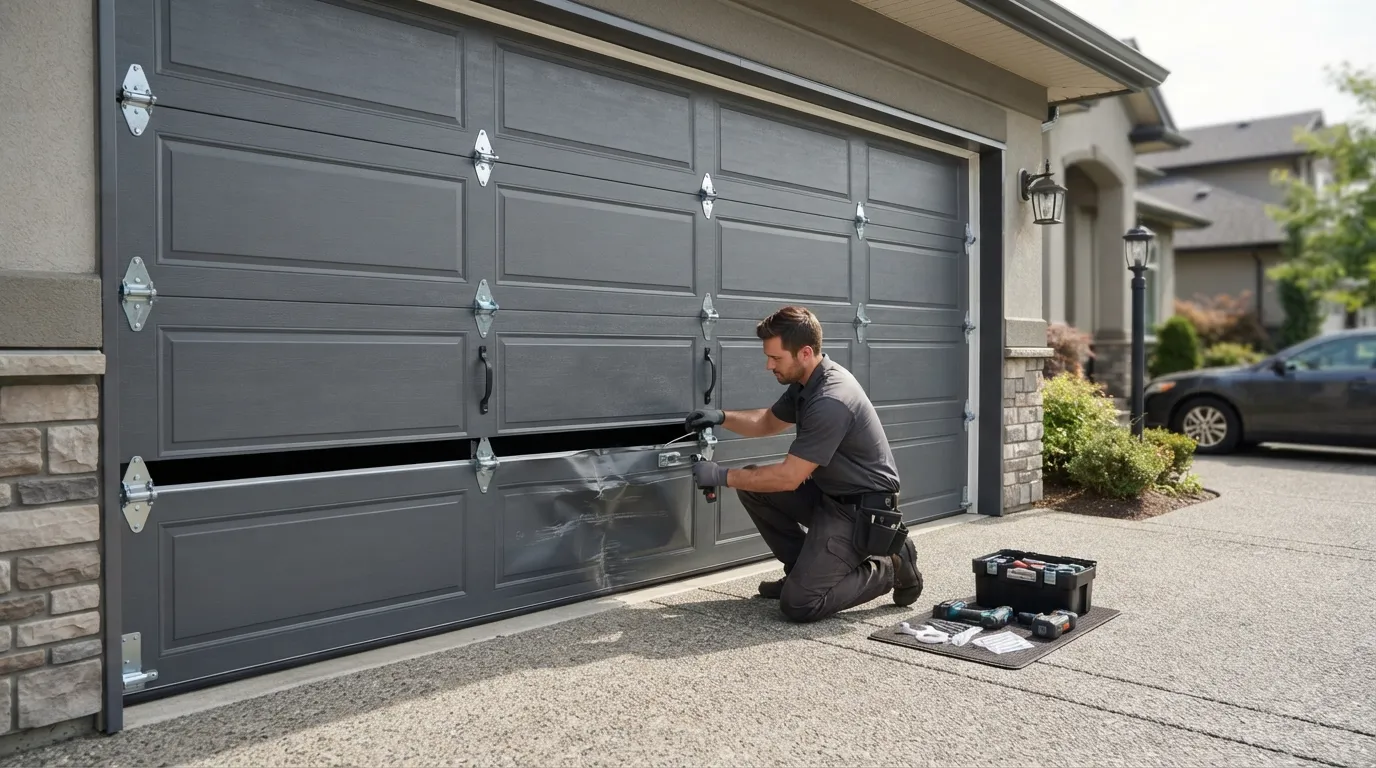
None of this is a full teardown - it's an hour of checking the parts that fail first on a door this old, before they fail on a Tuesday morning with the car trapped inside.
Local causes
Welby sits inside a cold-climate band with severe winter conditions, and a door built around 1974 wasn't engineered with today's cold-weather sealing or insulation standards. That combination - old hardware plus real winter - is what actually breaks things here. Steel contracts in a hard freeze, and a torsion spring already at the end of its service life loses tension faster under repeated cold cycling than it would in a milder climate. Track bolts that are a quarter-inch loose in July can be a full quarter-inch worse by February, because the wood jamb they're anchored to shrinks and swells with every freeze-thaw.
This is also why maintenance timing matters more here than in newer subdivisions elsewhere in the service area. A door built in 2005 has synthetic seals and zinc-coated hardware rated for the cold. A door built in the low-to-mid 1970s, sitting in the same winters, doesn't have that margin. The fix isn't different parts - it's checking more often.
On the truck
For a maintenance call on a house this age, the truck carries standard torsion springs in the sizes common to 1970s single and double doors, replacement rollers (both steel and nylon, since owners often ask to upgrade at this point), cable and drum sets, and track hardware - bolts, brackets, and shims for the alignment work that's almost always needed on a door this old.
We carry weatherstrip and bottom seal stock too, since that's a near-universal replacement on a door built in this era. What we don't carry is obsolete or decorative panel hardware specific to a discontinued door model.
If a homeowner's door used a hinge or panel style no longer made, that's a special-order part, and we'll say so on the spot rather than pretend otherwise. It's the one honest limit on a truck stocked for age, not for every model ever installed.

Warning signs
On a door built around 1974, the first sign is usually noise - a grinding or popping on the way up that wasn't there a year ago. The second is a door that reverses on its own partway through closing, which on an older opener usually means the spring tension has drifted enough that the unit reads it as an obstruction. A third, quieter sign: the door starts closing unevenly, one side dropping faster than the other, which points to a roller or cable issue on one track rather than the spring itself.
Homeowners in this age bracket also notice the door getting heavier to lift by hand during a power outage - a direct read on spring tension loss. None of these are emergencies on day one. Left alone through a winter, any one of them becomes one.
Booking
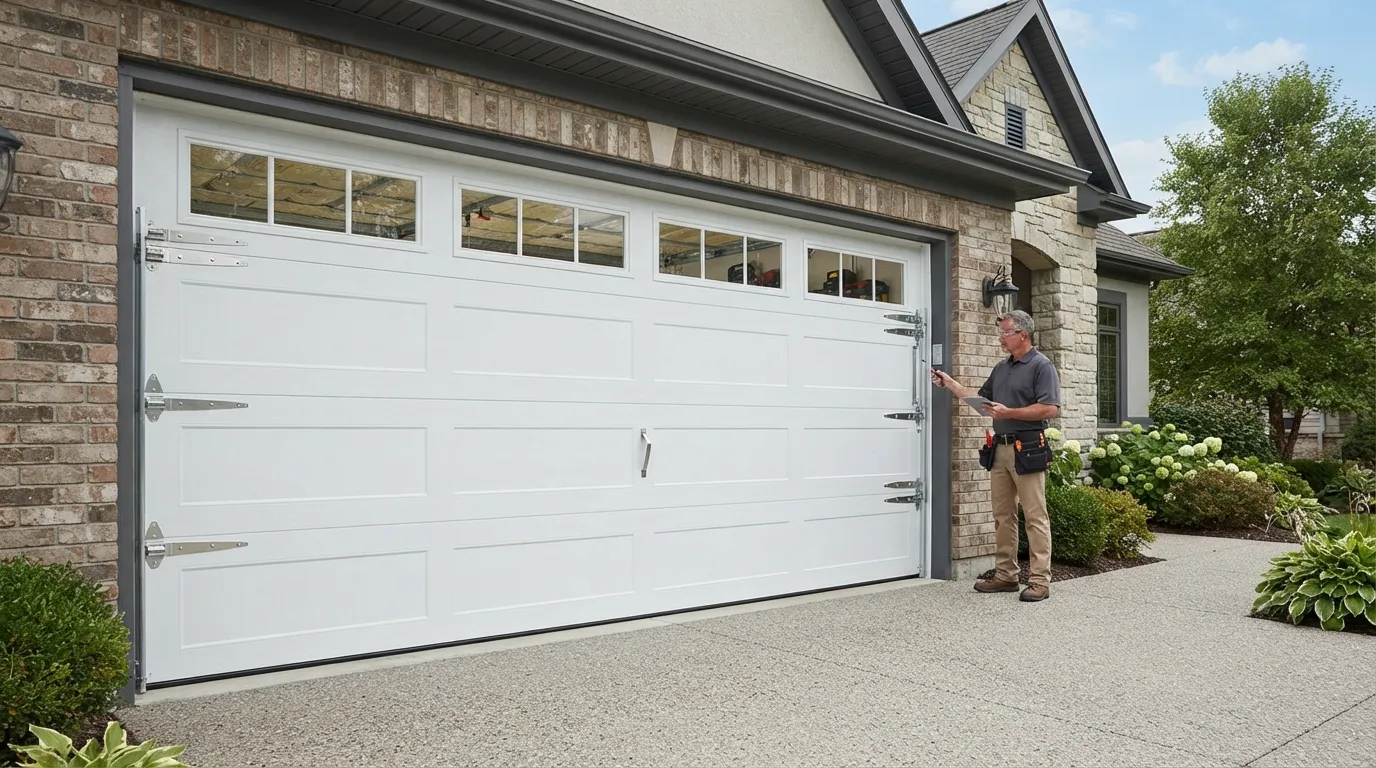
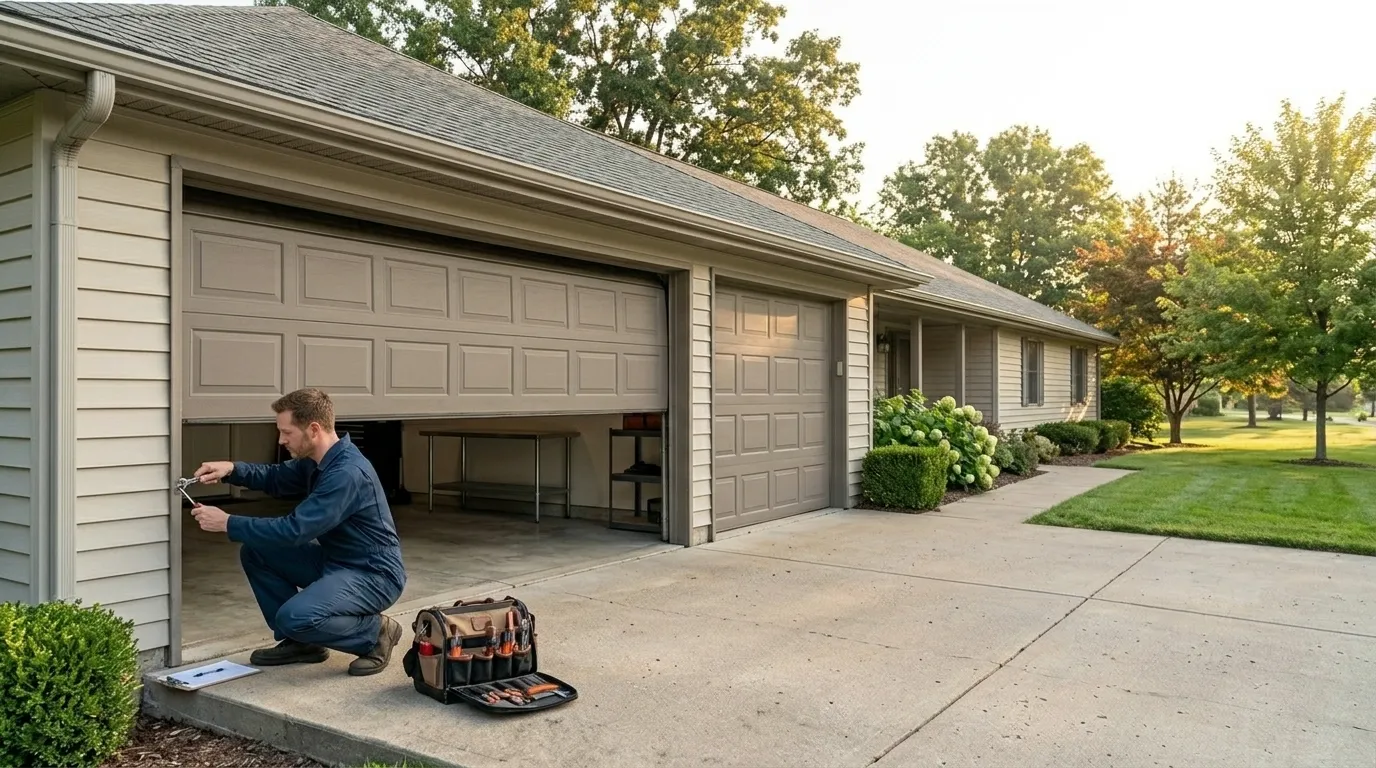
Thornton Garage Door Pros covers Welby from Thornton, about six miles out, so there's no local branch to visit - the crew comes to the house. For a maintenance visit on a door in the age range common here, that's checking spring tension, tracks, rollers, cables, and seals as one pass rather than waiting for one part to fail and calling that a repair. Given the income profile of the area, catching wear early is usually the cheaper path than waiting for a spring to let go and take a cable or opener gear with it. See the Welby service page for what else the crew covers out here, or the Thornton maintenance page for the base service this is built on.
Questions
Depends on the parts, not the age alone. A worn spring, rollers, or cables on a 1974-era door are a $150-300 maintenance fix, not a reason to replace. Replacement makes sense when the panels themselves are rusted through or the track is bent beyond adjustment - maintenance won't fix either of those, and at that point a new door is the better spend.
More often than a newer one. The cold winters here put extra strain on hardware that wasn't built to current cold-weather standards, so an annual check catches spring and track wear before it becomes a stuck door on a freezing morning.
Steel hardware contracts in the cold, and an older spring already near the end of its life loses tension faster under repeated freeze cycles. The groaning is usually the spring and rollers working harder than they should, not a sign the whole unit is failing.
No, the crew works out of Thornton and drives out to Welby for every call - it's about six miles. There's no local office to visit, but that doesn't change how the maintenance work is done on site.
Explore more
Ready when you are
Thornton Garage Door Pros repairs and installs garage doors, springs and openers in Thornton, CO and the surrounding area.